
Can a handyman do electrical work in Florida? Not for pay. Wiring is electrical contracting, and the exemptions in section 489.503 of the Florida Statutes have no carve-out for handymen or small jobs. The $2,500 handyman exemption people quote sits in a different part of the law and covers building work, not wiring. The only person who can wire a house without a license is the owner, working on their own home, under a permit.
What it looks like when that rule gets skipped is below. All five photos are from one attic, after a handyman did the wiring.
What we found in the attic
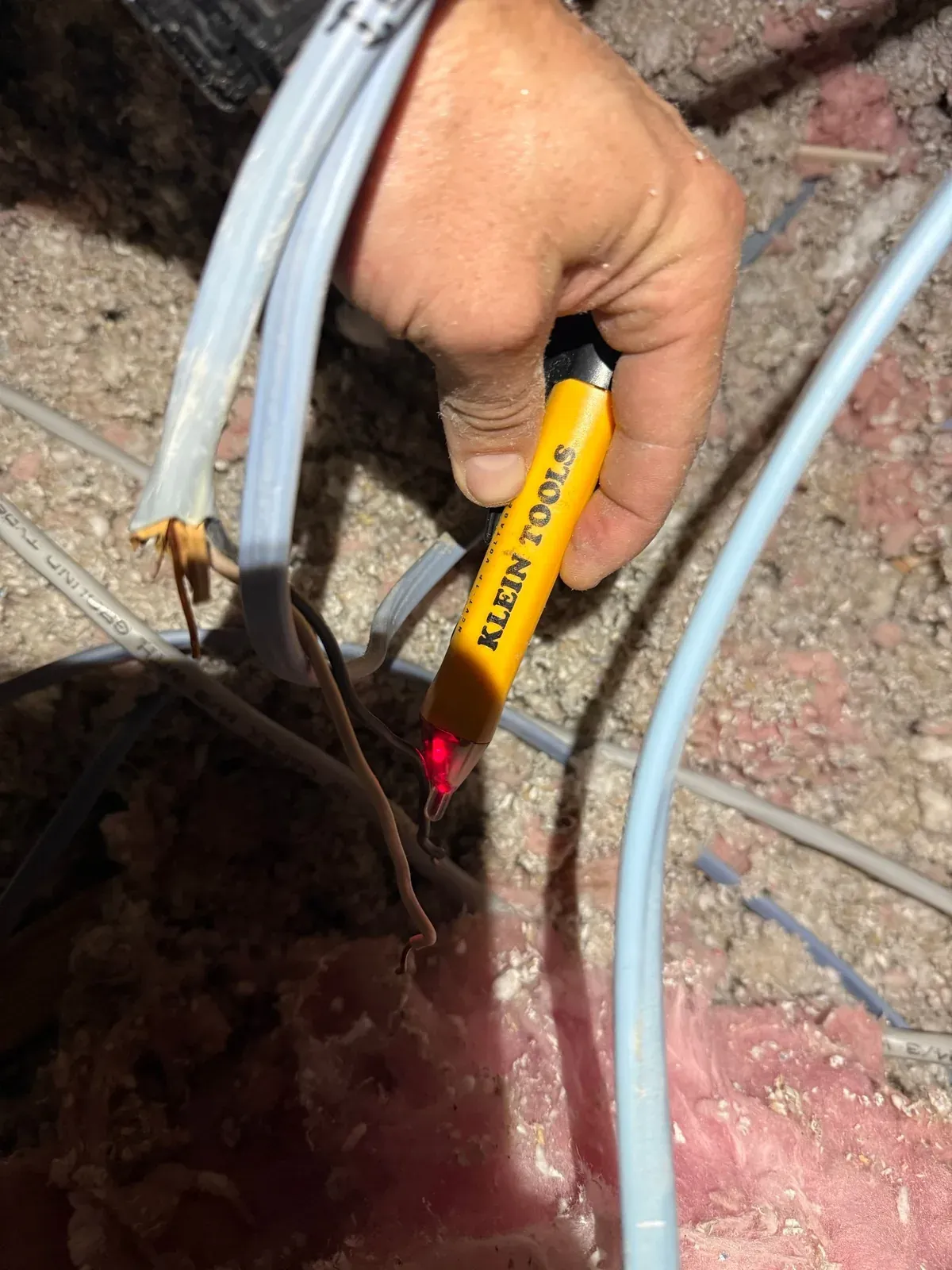
The first thing was a cable cut off and left in the insulation. Jacket stripped back, conductors bare, no box, no wire nuts. The voltage tester lit up red. The cable was live.
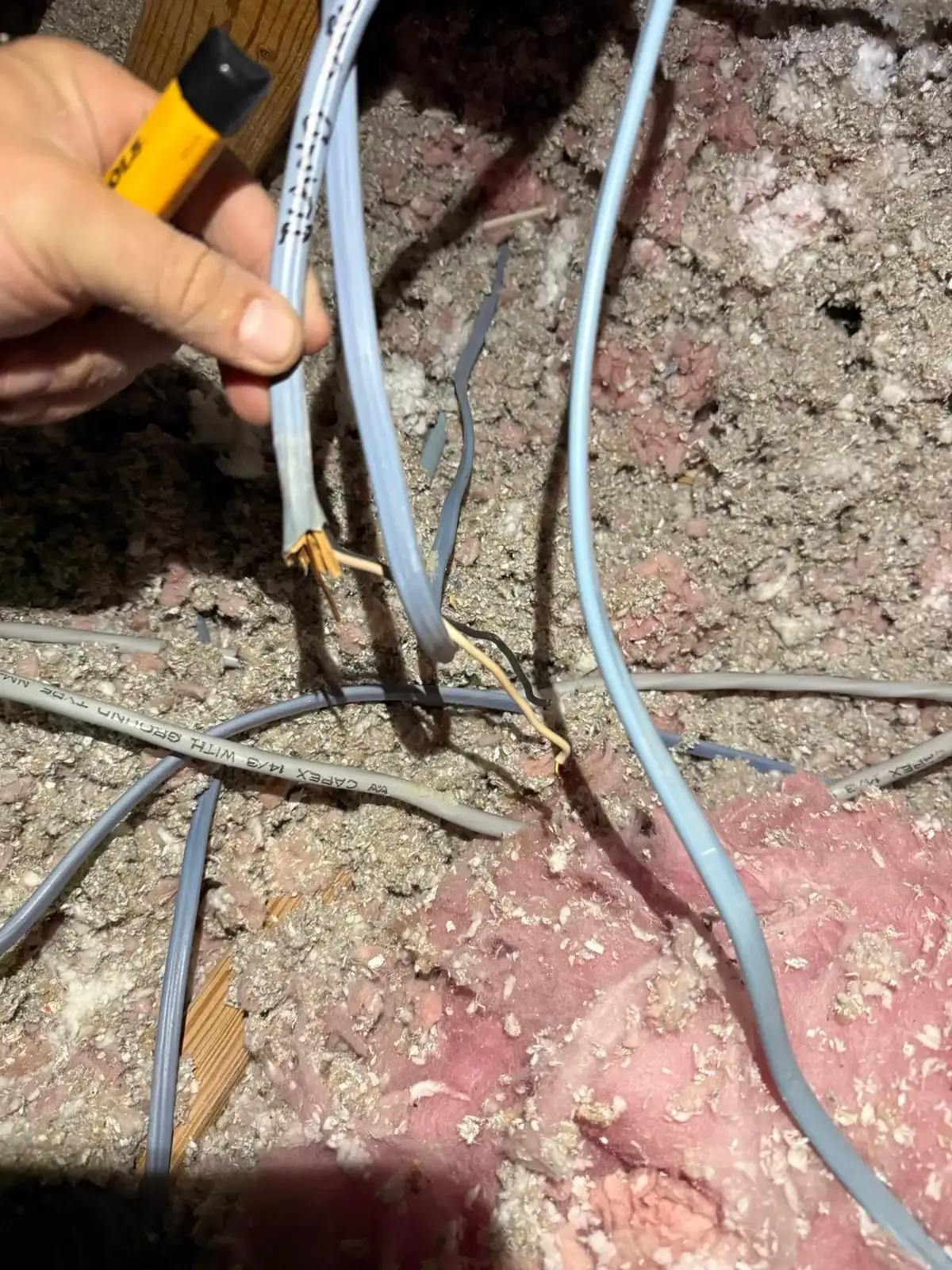
From the other side: the cut end, the bare copper, and the cables it was lying across.
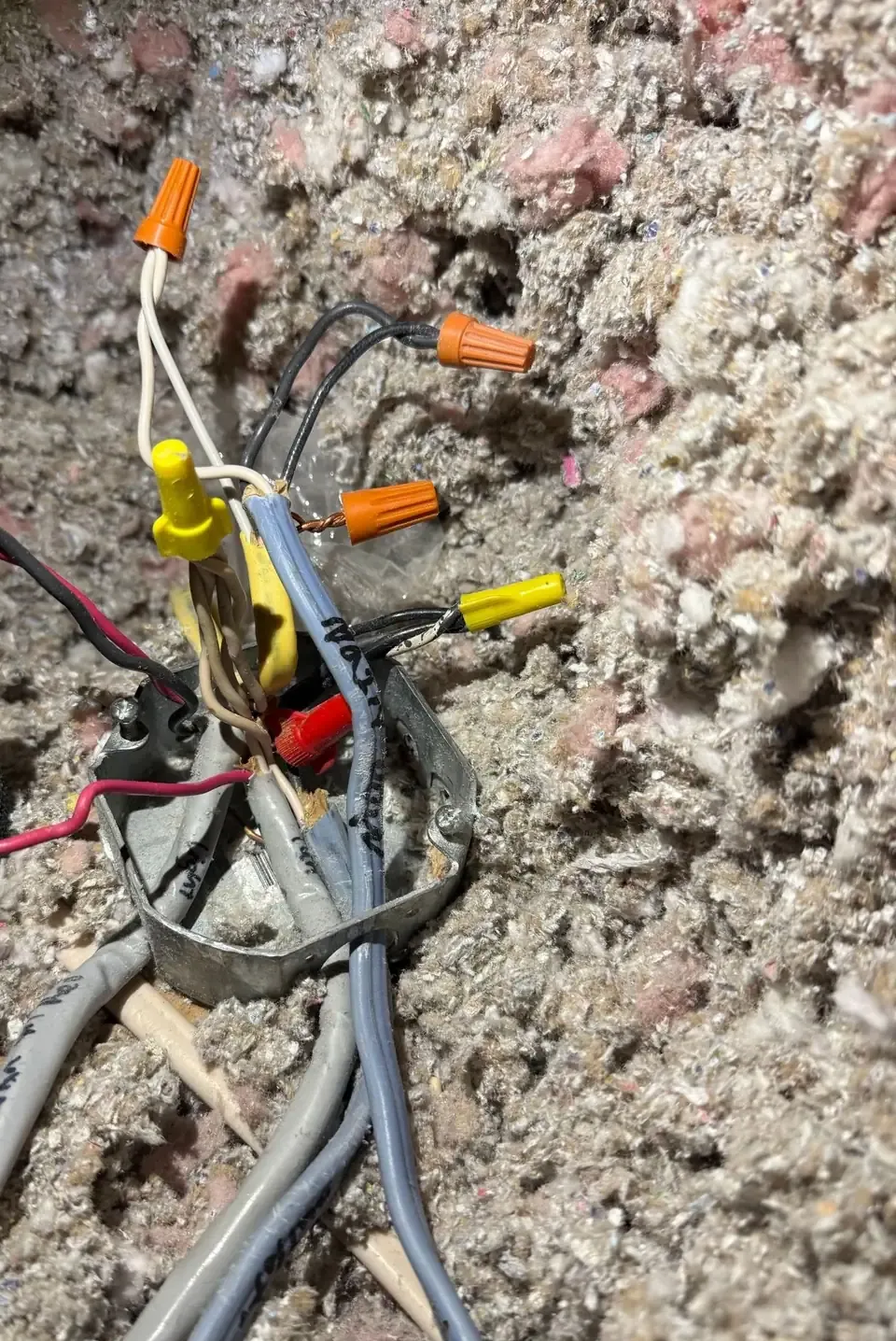
Then the boxes. One metal box had no cover. Most of its splices were sitting above it, wire nuts out in the open, pushed into the insulation.
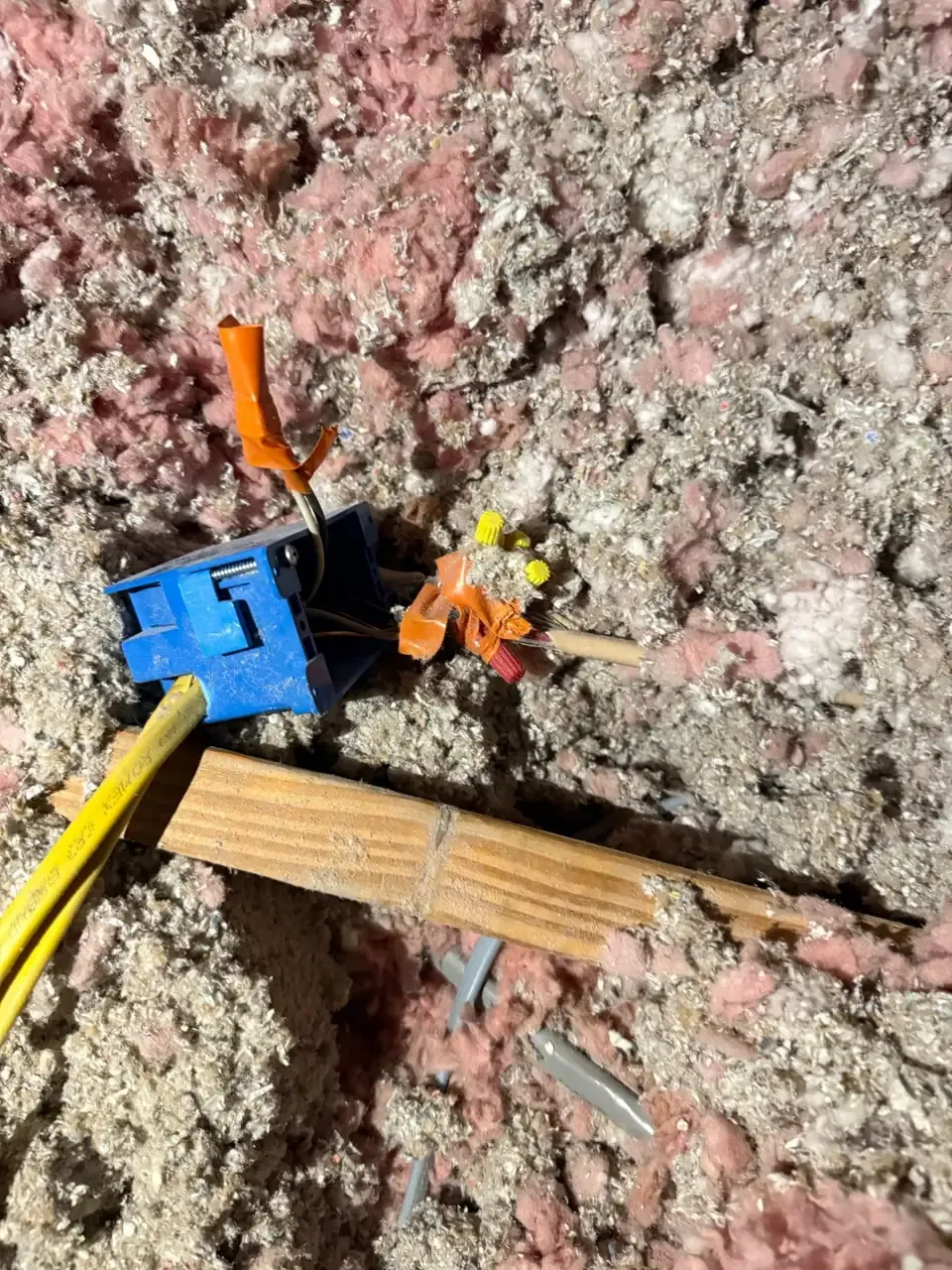
Another one, a plastic box, was not fastened to anything. It lay loose on top of the insulation. Its splices were wrapped in orange tape and left outside it. The box was right there.
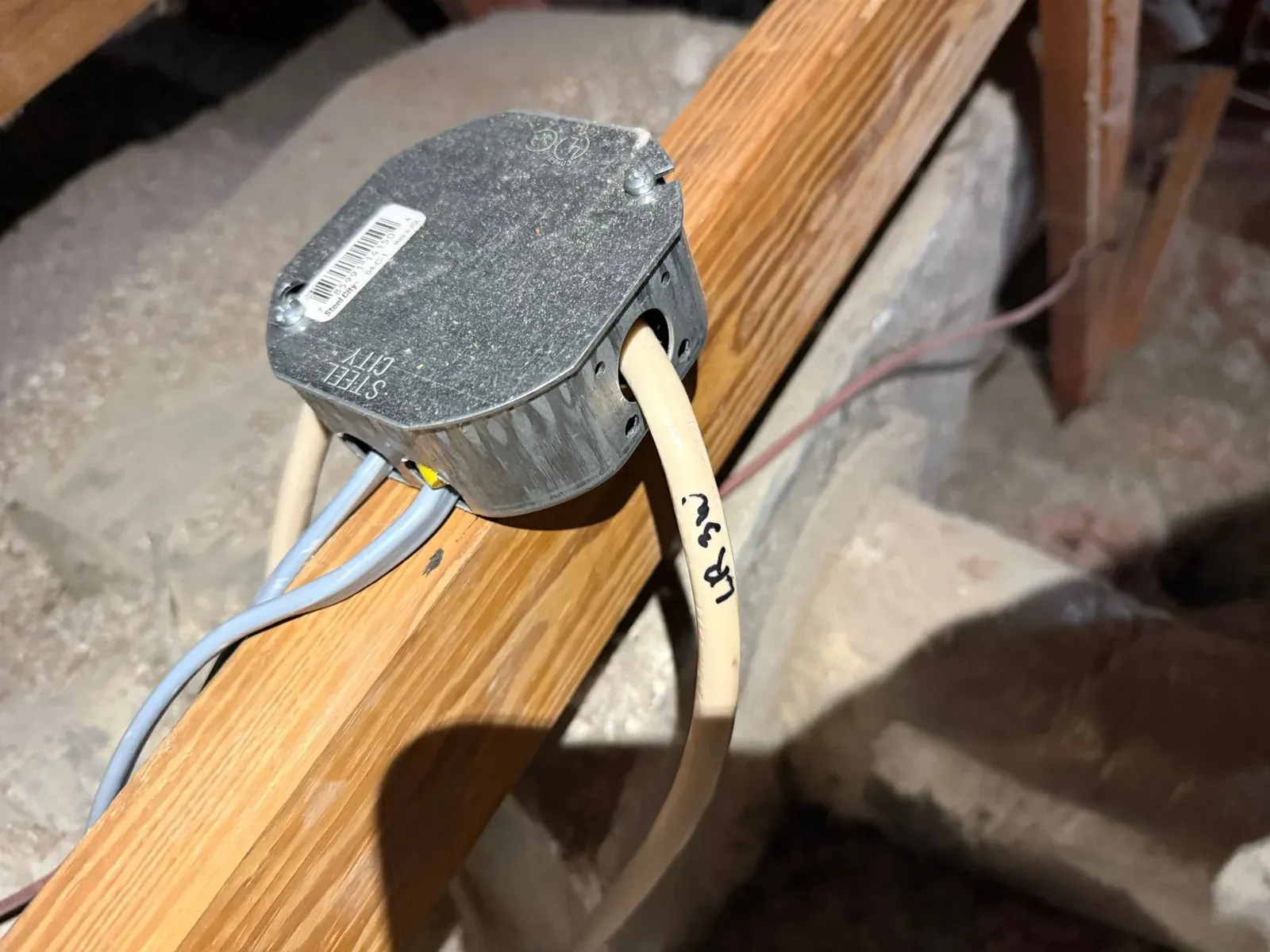
The one box that looked finished had its cover on. The cables went in through bare knockouts with no connectors, and the metal box was not grounded.
Open junction boxes and splices outside the box: what the code says
The National Electrical Code, which Florida adopts, has a rule for each of these.
Every splice goes in a box. NEC 300.15 requires a box at each splice point. A wire nut in the insulation is a splice with nothing around it. If it loosens and heats up, the only thing next to it is insulation.
Every box gets a cover. Under NEC 314.25, each box in a finished installation has a cover, a faceplate, a lampholder or a fixture canopy. An open box in an attic is the same exposed splice with a metal ring around it.
Cable is secured to a metal box. That is NEC 314.17. A listed cable connector clamps the cable where it enters and keeps the jacket off the sharp edge of the knockout. Without one, the cable can pull out of the box, and the edge rubs the jacket every time the cable gets moved.
A metal box is grounded. NEC 250.148 connects the circuit's ground wire to the box. If a hot wire touches an ungrounded metal box, nothing trips. The box stays live until someone touches it.
No live wire ends. A cut cable left energized is the one that hurts someone. The next person in that attic is an AC technician, a pest control tech, or you.
Can a handyman do electrical work in Florida? What the law says
There is no handyman license in Florida. A handyman works under an exemption for small jobs, and that exemption does not reach wiring.
The $2,500 exemption is in section 489.103, which covers construction contracting. Electrical contracting has its own list of exemptions in section 489.503, and there is no small-job exemption on it. "It was under $2,500" does not make a fixture swap or a new circuit legal for a handyman.
The owner exemption is narrow. Under 489.503(6), you can do the electrical work yourself on your own single-family home or duplex, for your own use, not for sale or lease, and you apply for and sign the permit in person. The disclosure statement you sign says it plainly: "You may not hire an unlicensed person as your electrical contractor."
The penalty is in section 489.531. Unlicensed electrical contracting is a first-degree misdemeanor. A repeat offense is a third-degree felony, and so is doing it during a declared state of emergency.
A handyman can still paint, patch drywall, hang cabinets and fix doors. The line is the wire.
How to check work a handyman already did
If the handyman painted, patched or hung shelves and never touched a wire, you do not need an electrician. Skip this part.
If the handyman installed a light, a ceiling fan or an outlet, or ran a cable, check three things.
Is anything acting up since the job? A breaker that trips, lights that flicker, a dead outlet, a switch plate or outlet that feels warm, a burning smell. Any of those, switch that circuit off at the panel and call. Do not go into the attic to look. If the breaker is the symptom, here is why a breaker keeps tripping.
Was there a permit? Ask. If the answer is no, nobody inspected the work.
Is the person licensed? Look them up on the Florida DBPR license lookup. A licensed electrical contractor has a number you can check. Ours is ER-13016759.
If you want the whole job looked at, an electrical inspection gets you a written report and photos of what we find.
What fixing it involves
Most of this does not mean rewiring the house. Do not let anyone sell you a rewire over one bad attic.
The fix is finding every splice the handyman made and doing each one right: a box at every splice, the box fastened to the framing, a connector at every cable entry, the ground bonded to every metal box, a cover on every box, and cut cables either removed or properly terminated. Then every circuit gets tested. If the original job was a fixture or a fan, it gets installed properly at the same visit.
How long that takes depends on how many splices the handyman made and how far apart they are. Finding that out is what the diagnostic is for.
We do not publish a price for this, because the attic sets it. The $89 diagnostic covers finding the work and writing down what it takes to fix, and the $89 applies toward the repair. We tell you the price before we start. You say yes or you say no. If you say no, you pay the $89 and we leave.
If a wire is live and exposed, or something smells hot, that is an emergency call, not a scheduled one. Everything else is ordinary residential electrical repair.
Tony
Licensed Electrical Contractor · ER-13016759 · Tampa Bay, FL
Owner of My Fixer LLC, serving Tampa Bay since 2018. 342 Google reviews at 4.9 stars.
About Anatoliy →Frequently Asked Questions
Can a handyman do electrical work in Florida?+
Not for pay. Electrical work is electrical contracting, and the exemptions in Florida Statute 489.503 have no carve-out for handymen or small jobs. A handyman can paint, patch and hang cabinets, but connecting wires is a licensed trade.
Does the $2,500 handyman exemption cover electrical work?+
No. The $2,500 minor-work exemption is in section 489.103, which covers construction contracting. Electrical contracting has its own list of exemptions in section 489.503, and there is no small-job exemption on it.
Can a handyman replace a light fixture or ceiling fan in Florida?+
Not legally, if it is paid work. Swapping a fixture or a fan means connecting wires, and Florida's electrical exemptions have no small-job exception. Hire a licensed electrical contractor, or do it yourself under the owner exemption with a permit.
Can I do my own electrical work in Florida?+
Yes, on your own single-family home or duplex, for your own use and not for sale or lease. You apply for and sign the permit in person and do the work yourself. The disclosure statement you sign says you may not hire an unlicensed person as your electrical contractor.
What is the penalty for unlicensed electrical work in Florida?+
Under section 489.531, unlicensed electrical contracting is a first-degree misdemeanor. A repeat offense is a third-degree felony, and so is unlicensed electrical contracting during a declared state of emergency.
Is an open junction box in the attic dangerous?+
Yes. NEC 314.25 requires a cover on every box, and the splices inside an open box are exposed to anyone in the attic and to the insulation around them. Splices left outside a box are worse. Switch the circuit off and have it boxed and covered.
Why does a metal junction box need to be grounded?+
NEC 250.148 requires the circuit's ground wire to be connected to a metal box. If a hot wire touches an ungrounded box, nothing trips and the box stays live. With the ground connected, the fault trips the breaker.
How do I check if an electrician is licensed in Florida?+
Search their name or license number on the Florida DBPR license lookup at myfloridalicense.com. A licensed electrical contractor has a number you can verify before work starts. Fixer Service is licensed under ER-13016759.
Have a Question?
Ask our licensed electrician directly. Electrical and appliance repair specialist. You'll get a reply within minutes.