
A circuit breaker that keeps tripping is protecting your home from one of four things: an overloaded circuit, a short circuit, a ground fault, or a worn-out breaker. Reset it once and it holds — that's usually a one-time overload, nothing to worry about. Reset it and it trips again within minutes, or it trips with nothing plugged into that circuit — that's a wiring or breaker problem. Don't just reset a tripped breaker if it trips again immediately. Have it checked.
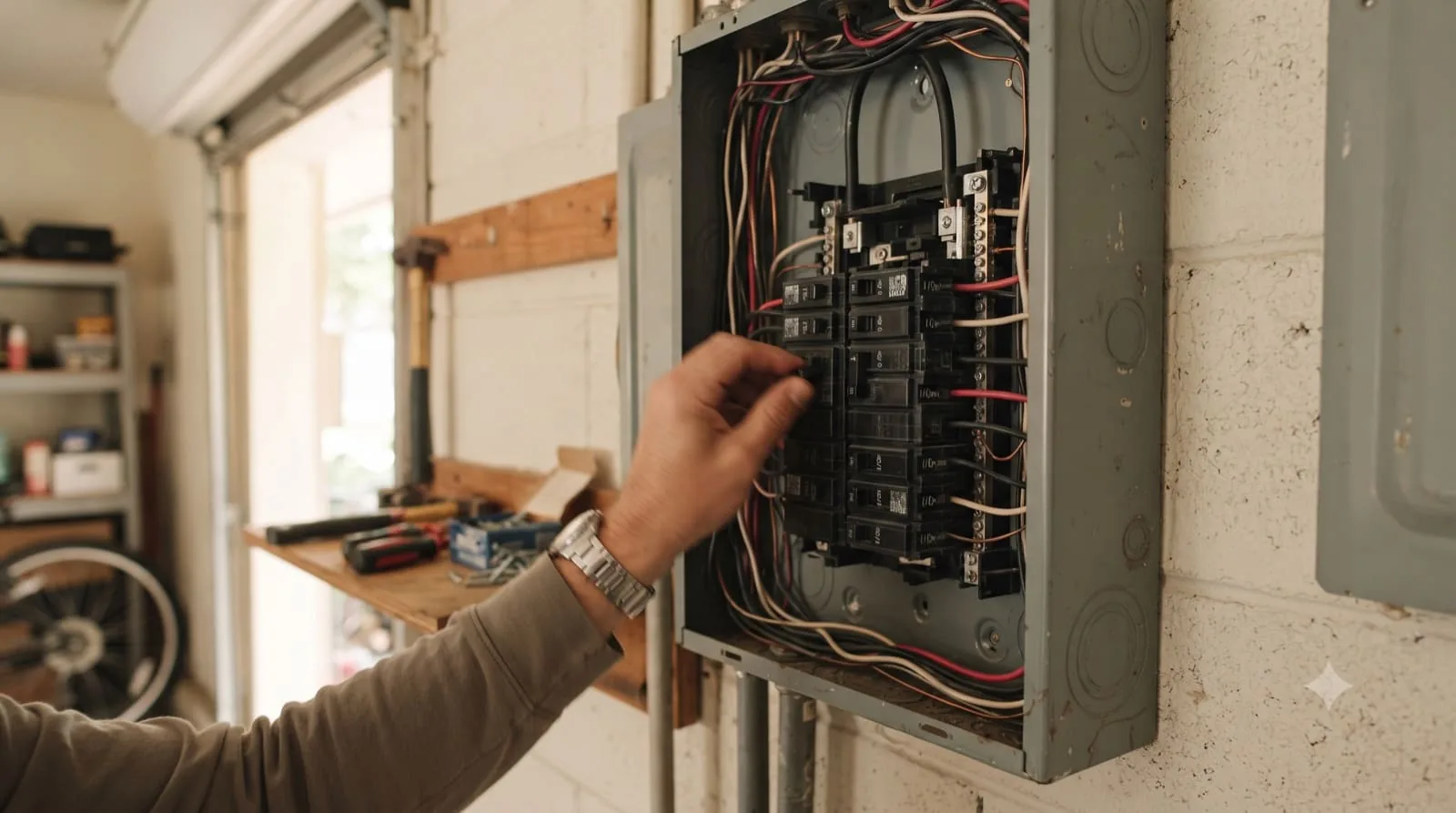
What a Tripped Breaker Is Actually Doing
A breaker trips when current on a circuit exceeds what the wire can safely carry. It's not malfunctioning — it's doing its job. The wire gauge in your wall sets a limit, the breaker matches that limit, and current above it means the wire is heating up faster than it can dissipate that heat. The breaker cuts power before that heat becomes a fire.
That's why resetting a breaker over and over without finding the cause is the wrong move. Each trip means the wire got hot enough to matter.
The Four Most Common Causes
Overloaded circuit
Too many devices drawing current on one circuit at the same time. The classic case: microwave, toaster, and coffee maker on the same kitchen circuit at 7 AM. That circuit was only ever built for one of those running at once. It trips every morning until someone notices the pattern and moves the toaster to a different outlet.
Fix: spread heavy-draw devices across different circuits. If the kitchen genuinely needs more capacity, that's a conversation about adding a circuit — not installing a bigger breaker. A bigger breaker on the same wire is a fire hazard, not a solution.
Short circuit
A hot wire touches another hot wire or a neutral wire, creating a direct path with almost no resistance. Current spikes instantly. The breaker trips the moment it happens — not gradually, like an overload does. Damaged insulation, a pinched wire behind a fixture, or rodent damage in the attic are the usual causes.
Ground fault
A hot wire touches a grounded surface — a metal outlet box, an appliance casing, a junction box. Water exposure and damaged insulation are the most common triggers. This is different from a GFCI outlet tripping, which we'll get to below.
A worn-out breaker
Breakers are mechanical. The trip mechanism wears down with age and with every cycle. If the wiring and every device on the circuit check out clean and it still trips, the breaker itself is often the next thing we test. On an older panel, a worn breaker is sometimes the first sign the whole panel is aging out — see when a panel needs replacing if that's the direction it's heading.
Why This Shows Up More in Tampa Bay Homes
Two things make breaker tripping more common here than in a lot of the country. The first is air conditioning. A compressor draws a heavy surge of current the instant it starts up — several times its running amperage for a fraction of a second. An older 100-amp panel that was fine in 1985 is often undersized once you add central air, a home office, and an EV charger to the same service. More on when a panel can't keep up.
The second is humidity. Florida's coastal counties — Pinellas especially — see salt air and moisture work on breaker contacts and panel connections over the years. Corrosion adds resistance at a connection point, that connection heats up, and a breaker that used to hold fine starts tripping under normal loads. Older Hillsborough homes with aluminum wiring from the 1960s and 70s have their own version of this problem at every splice.
Newer homes, and any home with recently updated circuits, also run into AFCI breakers — arc-fault breakers required by current code in most living spaces. They're more sensitive than a standard breaker: instead of just watching current level, they watch for the electrical signature of arcing, and they can nuisance-trip on certain vacuum cleaners, older motors, or a long extension cord even when nothing is actually wrong. If only your newer circuits are tripping and the panel has AFCI or dual-function breakers, that's worth mentioning when you call.
Circuit Breaker Tripping vs. GFCI Outlet Tripping
These get confused constantly, and they're not the same problem. A GFCI outlet trips at the outlet itself — you'll see a small reset button pop out on the outlet face, usually in a bathroom, kitchen, garage, or anywhere near water. A breaker trips at the panel and cuts power to every outlet and fixture on that circuit.
If a single outlet or a couple of nearby outlets stopped working, check the GFCI first. Here's the full breakdown on GFCI tripping. If a whole room, or several rooms, lost power at once, that's the breaker.
How to Safely Reset a Breaker
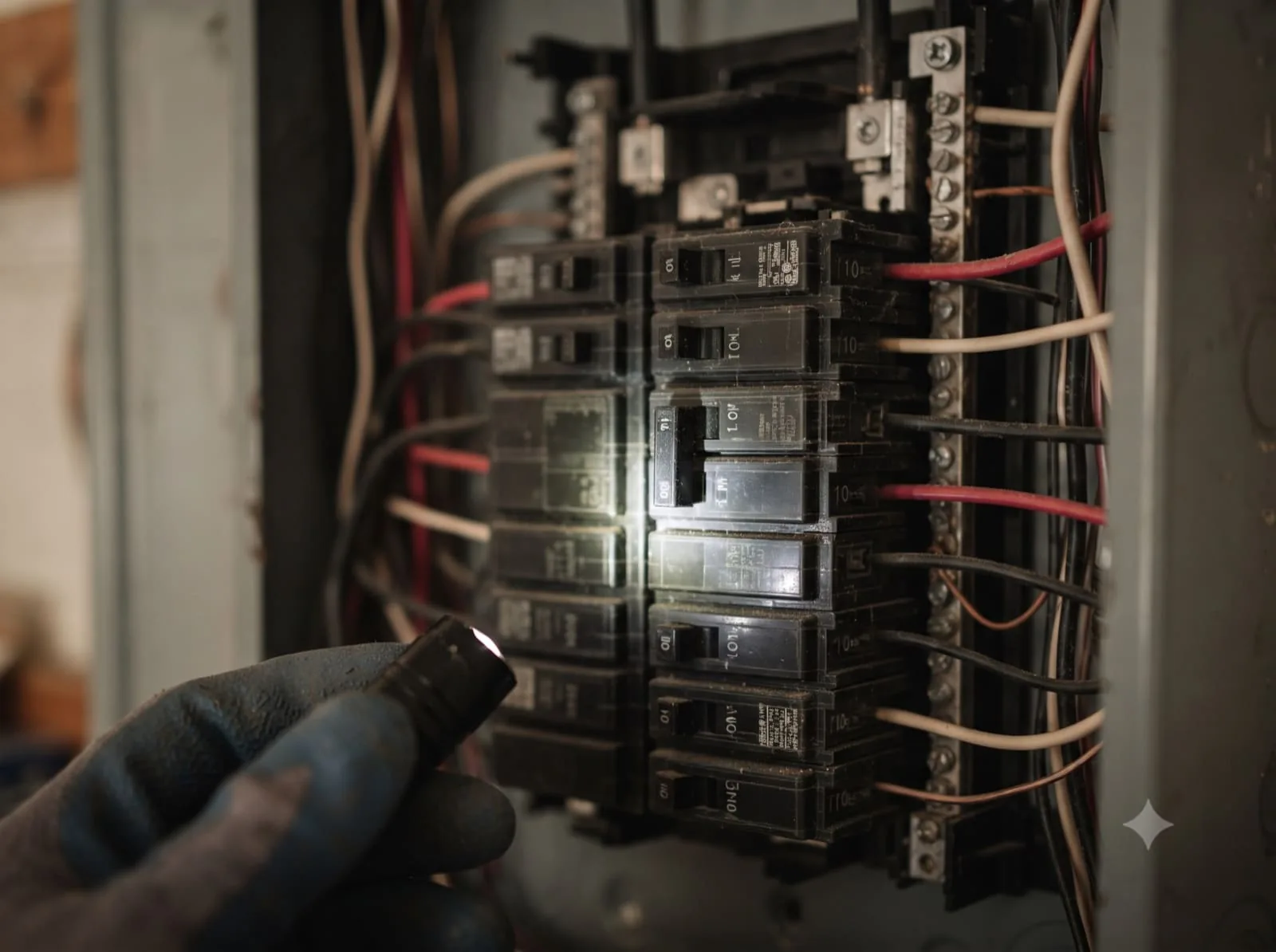
Unplug everything on the affected circuit first. At the panel, find the breaker — it sits in a middle position between On and Off, not fully at either end. Push it firmly to Off, then back to On. If it holds, plug devices back in one at a time until you find what trips it again.
If it trips again before you've plugged anything back in, stop. That's not an overload — it's the wiring or the breaker.
When a Tripping Breaker Means You Need an Electrician
A single trip from an obvious overload is normal. These signs are not.
It trips immediately, with nothing plugged into the circuit. That's a short or a ground fault in the wiring itself, not a device problem.
It trips multiple times in the same day. A worn breaker or a wiring fault, not a coincidence.
The breaker or panel feels warm, or you smell burning. Stop reading. Call (727) 222-9892 now. That's an emergency electrical call, not something to monitor overnight.
Buzzing or crackling from the panel. Arcing inside the enclosure. Don't touch the panel — call.
It's a Federal Pacific or Zinsco panel. These brands have documented breaker failure rates, and most Florida insurers won't write or renew a policy on a home that has one, tripping breaker or not.
What We Actually Check
We test the breaker, the wiring on that circuit, and the panel it's mounted in before quoting anything. We tell you the price before we start. You say yes or you say no. If you say no, you pay the $89 diagnostic and we leave. That's the deal on every job — no surprise number after the work is already torn apart.
How We Trace It Back to the Source
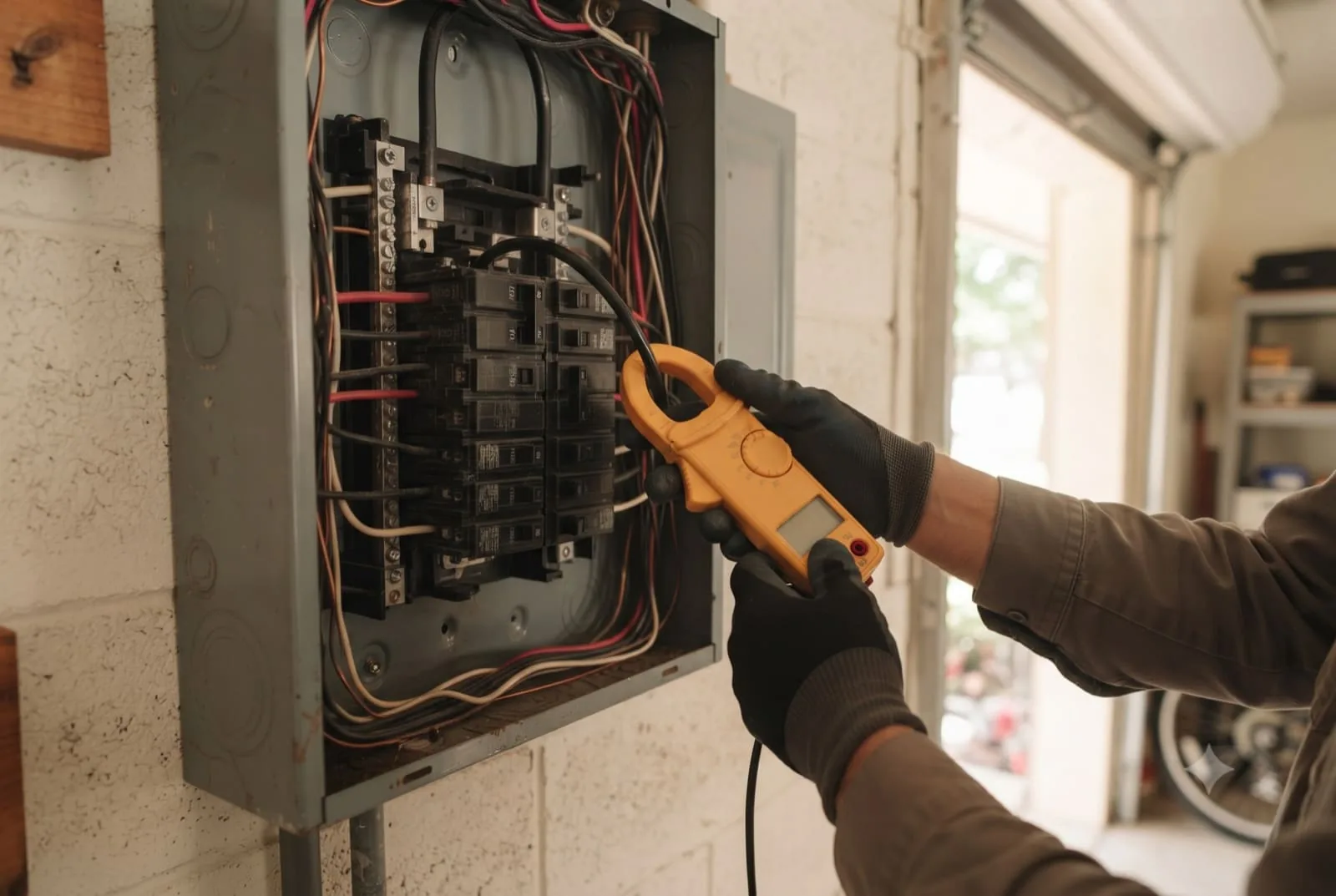
A breaker that keeps tripping only tells you where the problem shows up — not what's causing it. Tracing it back starts at the panel: is the breaker itself faulty, or is it doing its job correctly and reporting a real problem downstream? A clamp meter on the circuit under normal load answers that first question in minutes.
From there it's process of elimination. Every outlet, switch, and fixture on that circuit gets checked for loose connections, damaged insulation, and signs of heat stress — burn marks, discolored plastic, a scorched smell at a specific junction box. In older homes, that check includes the attic and crawlspace runs, not just what's visible in the wall.
Sometimes the fault is one bad connection in one junction box, and the fix is contained to that box. Sometimes it's the panel itself, worn out after twenty-plus years of Florida heat cycling the breakers. The diagnostic is what tells you which one you're dealing with before any repair gets quoted.
What It Costs to Fix
If it's a single bad breaker, that's usually a straightforward swap done the same visit as the diagnostic. If the real problem is the panel underneath it — aging, undersized for your current loads, or a Federal Pacific / Zinsco panel — the fix is a panel upgrade. In the Tampa Bay market, that starts at $2,911 depending on meter base condition and how many circuits need to land on the new panel. Panel upgrade details and current pricing.
Every price here is a starting point. The exact number is written down after the $89 diagnostic, before any work starts.
Every electrical repair carries a 36-month warranty. The National Electrical Code sets the standard every breaker and panel installation has to meet — it's not a suggestion, and it's why a licensed electrician pulls a permit on panel work. Repeated breaker failures on certain older panel brands are serious enough that the Consumer Product Safety Commission has documented them as a known hazard.
A breaker that trips once told you something. A breaker that keeps tripping is telling you again. Residential electrical repair covers everything from a single bad breaker to full rewiring — the $89 diagnostic tells you which one you're dealing with before anything gets quoted. In a house built between 1965 and 1975, a breaker that keeps tripping sometimes traces back to the branch wiring instead of the panel: aluminum wiring and what replacing it costs.
Tony
Licensed Electrical Contractor · ER-13016759 · Tampa Bay, FL
Owner of My Fixer LLC, serving Tampa Bay since 2018. 337 Google reviews at 4.9 stars.
About Anatoliy →Frequently Asked Questions
How do I find out what's actually tripping my breaker?+
Unplug everything on that circuit, reset the breaker, then plug items back in one at a time. Whatever's running when it trips again is the overload. If it trips before you plug anything back in, the problem isn't a device — it's the wiring or the breaker itself. That's when you stop and call.
Can a circuit breaker go bad and just need replacement?+
Yes. Breakers are mechanical. The trip mechanism wears out with age and with every trip cycle. An old breaker can start tripping under loads it used to handle fine. If the wiring and devices on the circuit all check out clean, the breaker is usually the next thing we test.
Is it dangerous if a breaker keeps tripping?+
The tripping itself is the safety feature working. What's dangerous is resetting it over and over without finding out why. A short circuit or ground fault behind that repeated trip can overheat wiring between resets. Don't just reset a tripped breaker if it trips again immediately. Have it checked.
Why does my breaker trip with nothing plugged into that circuit?+
That points to the wiring itself, not a device — a short circuit, a ground fault, or a failing breaker. Lights on the same circuit count as something plugged in too. If the circuit is genuinely empty and it still trips, it needs a licensed electrician, not another reset.
What's the difference between a breaker tripping and a GFCI outlet tripping?+
A GFCI outlet trips at the outlet — a small reset button pops out on the outlet face, usually in a bathroom, kitchen, or garage. A breaker trips at the panel and cuts power to the whole circuit. If only one outlet stopped working, check the GFCI first. If a whole room or several rooms lost power, it's the breaker.
How much does it cost to fix a breaker that keeps tripping in Tampa Bay?+
The $89 diagnostic applies toward whatever the fix turns out to be. A single bad breaker is usually a straightforward swap done the same visit. If the real problem is the panel — aging, undersized, or a Federal Pacific / Zinsco panel — the fix is a panel upgrade, which starts at $2,911 in the Tampa Bay market depending on meter base condition and circuit count.
Can I just keep resetting the breaker myself?+
Once, sure — a single trip from an obvious overload is normal. If it trips again right away, or trips regularly with no clear cause, resetting it again doesn't fix anything. It just delays finding the wiring or breaker problem underneath.
Which appliances trip breakers most often in Florida homes?+
Air conditioners are the biggest one — the compressor draws a heavy surge on startup, and an undersized or aging circuit can't always absorb it. Space heaters, hair dryers, microwaves, and window AC units are the next most common, especially stacked on an older 15-amp kitchen or bedroom circuit.
Have a Question?
Ask our licensed electrician directly. Electrical and appliance repair specialist. You'll get a reply within minutes.