
If your Florida home was built between 1965 and the mid-1970s, it may have aluminum branch circuit wiring running to the outlets and switches. The U.S. Consumer Product Safety Commission approves exactly three permanent repairs: full replacement with copper, COPALUM crimp connectors, or AlumiConn connectors. Every other method sold as an aluminum wiring fix — including the twist-on pigtails most homeowners are offered — is not a permanent repair. Florida insurers care which one you chose, and they want the permit to prove it.
How to tell if you have aluminum wiring
Read the cable jacket. Go to the attic, the garage, or anywhere the cable runs exposed. The conductor type is printed or embossed on the outer jacket every few feet. Aluminum cable is marked AL or ALUMINUM.
One catch. If the marking also says CU-CLAD or COPPER-CLAD, that is copper-coated aluminum. Different product, different behavior, and the CPSC repair recommendations below do not apply to it. Read the whole marking before you conclude anything.
The lettering is often embossed rather than inked. Shine a flashlight across the jacket at a low angle and the letters come up. Reading it means a flashlight and a Florida attic. Bring water.
Age is the other signal. CPSC states that homes built before 1965 are unlikely to have aluminum branch circuits. Cable installed between 1965 and the mid-1970s may. A copper shortage in the mid-1960s pushed builders to use aluminum on general purpose 15- and 20-amp circuits, not just the large-appliance runs.
Here is the part that causes needless panic. Thick aluminum conductors feeding the range, the clothes dryer, or the main service entrance are normal. They are still installed today and they are not what CPSC studied. The hazard is the thin branch circuit wire going to your receptacles and switches. If an inspector wrote "aluminum wiring" on a report, ask which one they meant before you price a rewire.
Why aluminum branch wiring fails
Aluminum expands and contracts more than copper as it heats and cools. It also oxidizes under a screw terminal, and it creeps — the metal slowly deforms under the pressure of the screw. Over decades the connection loosens. A loose connection has resistance. Resistance makes heat. The damage accumulates.
The number behind it is not small. A national survey conducted by the Franklin Research Institute for CPSC found that homes built before 1972 and wired with aluminum are 55 times more likely to have one or more wire connections at outlets reach what CPSC calls Fire Hazard Conditions than homes wired with copper. CPSC defined that condition precisely: receptacle cover plate screws reaching 300°F, sparks coming from the receptacle, or charred material around it.
The failures usually arrive without notice. CPSC's own language is blunt — these connections "have been reported to fail and overheat without any prior indications or problems."
When there are signs, they are these: face plates warm to the touch, lights that flicker on one circuit, outlets or switches that stop working, or the smell of hot plastic near a device. Any of those on an aluminum-wired home is a same-week call, not a someday call.
If you smell burning plastic at an outlet, switch that breaker off and leave the device closed. Do not open it to look. Call a licensed electrician. You can read more on how failing devices behave in our guide to outlet and switch repair.
The three repairs CPSC approves
CPSC recommends a repair method only when there is documented evidence that it is safe, effective, and permanent. Methods built for temporary or emergency use do not qualify. By that standard, three methods make the list.
Complete replacement with copper. New copper branch circuits are installed and the old aluminum is abandoned in the walls. CPSC calls this "the best method available," then adds the honest caveat in the same paragraph: for many homes, rewiring with copper is impractical or prohibitively expensive. How practical it is depends on your house — attic access, crawl space, one story or two, plaster or drywall. See whole-home rewiring for how that job runs.
COPALUM crimp connectors. A copper pigtail is joined to the aluminum conductor with a crimp that cold-welds the two metals into a single mass. It is a permanent, maintenance-free repair. The catch is access: the tool is proprietary and the installer has to be certified to use it.
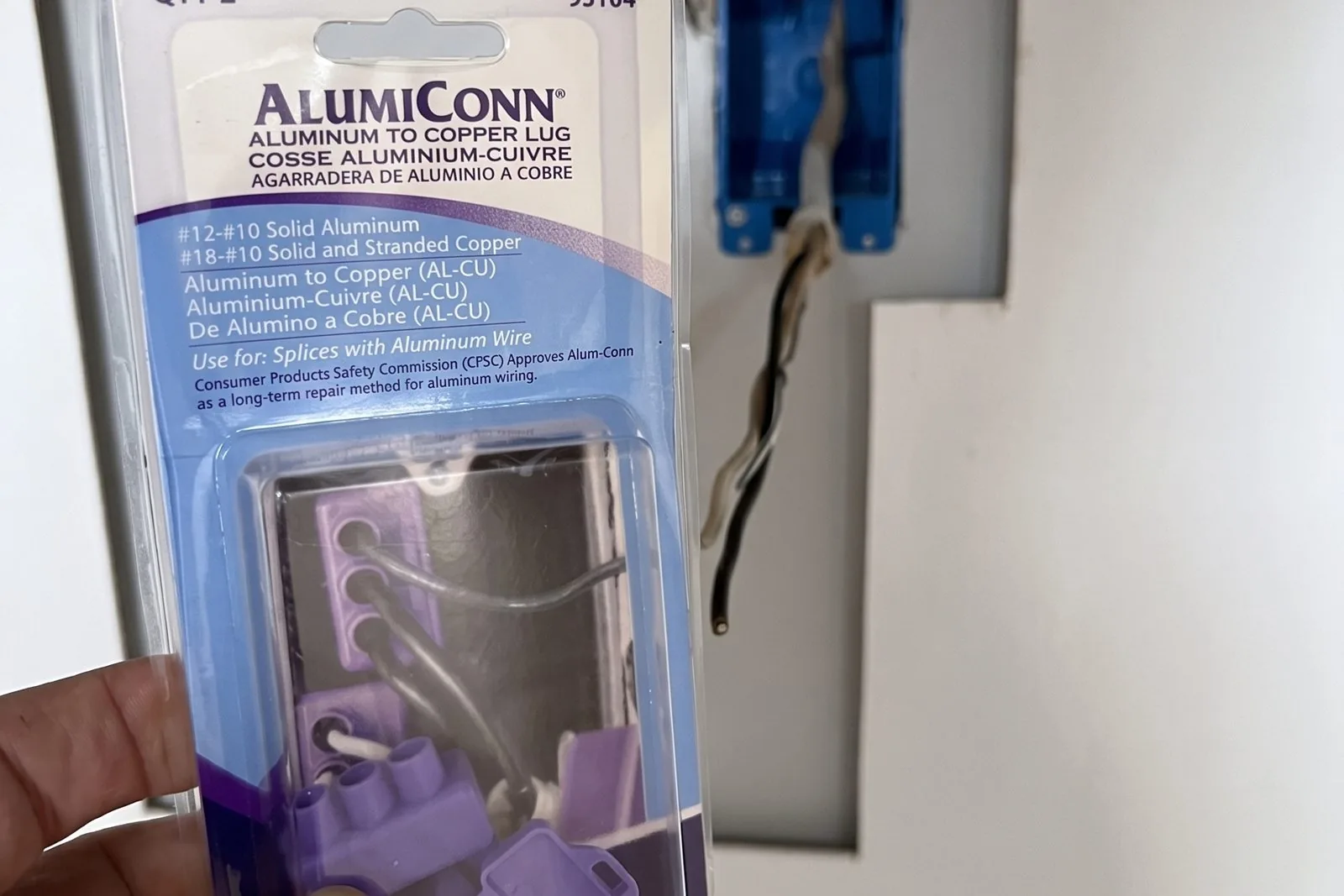
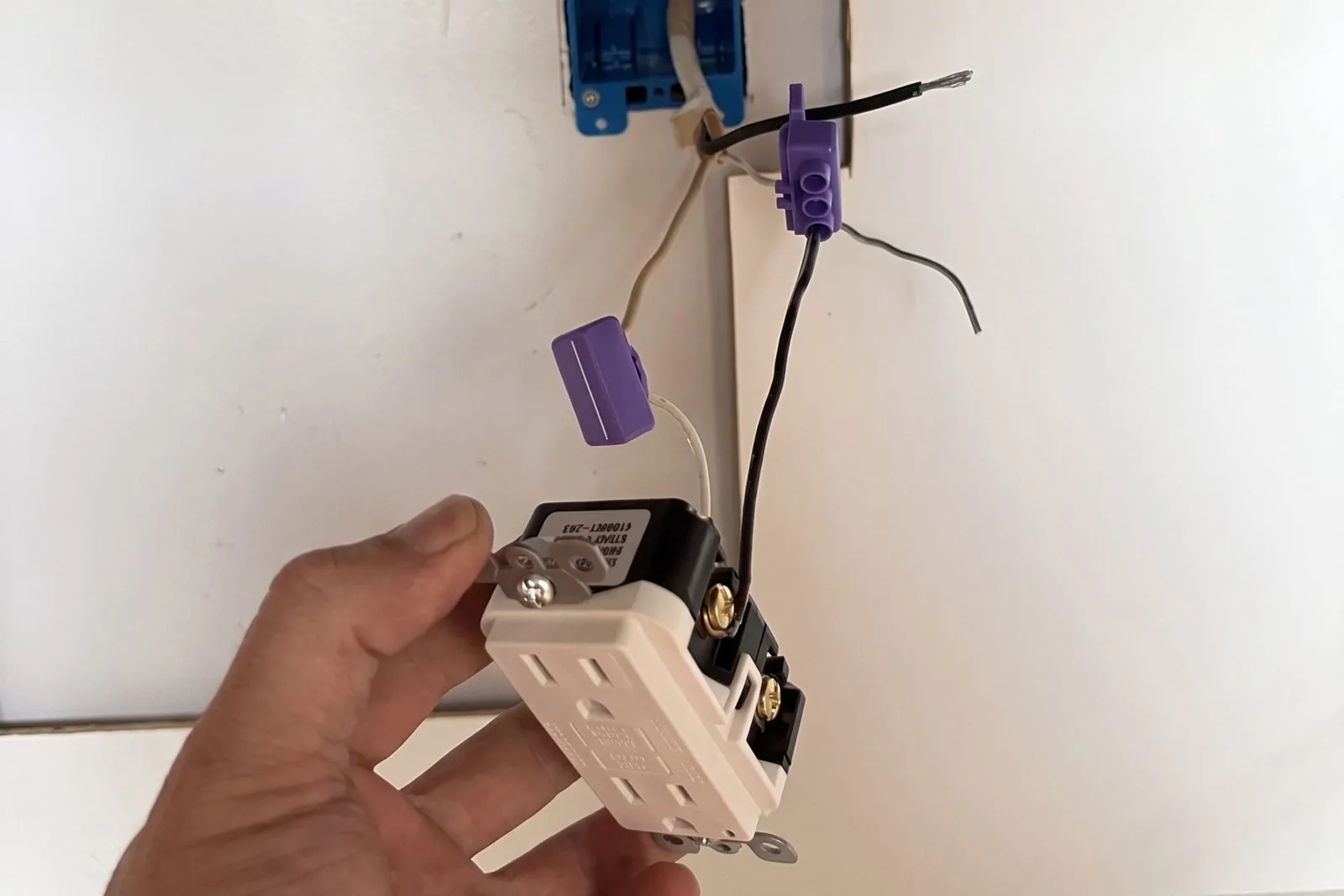
AlumiConn connectors. A set-screw lug that joins the aluminum conductor to a copper pigtail, with the screws torqued to specification. CPSC lists it as the acceptable alternative where COPALUM is not available. It needs a calibrated torque screwdriver and a technician who actually uses it, because the torque value is the repair.
The two repairs CPSC does not approve
This is the part most articles skip, and it is the part that costs people money.
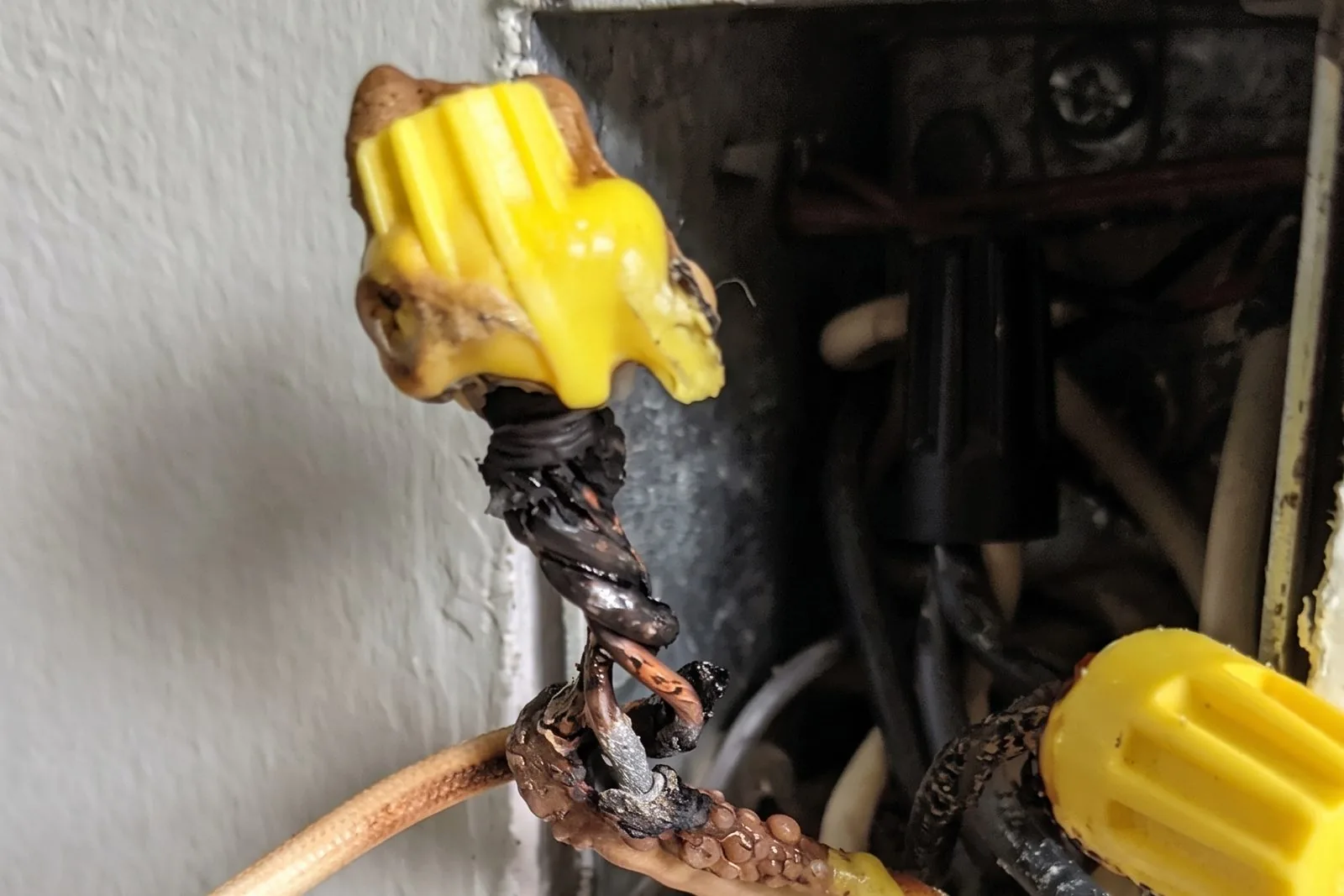
Twist-on connectors are not a recommended repair. Pigtailing aluminum to copper with a standard twist-on wire nut is the cheap version, and CPSC tested it. In CPSC-sponsored laboratory and life testing, substantial numbers of these connectors overheated severely. CPSC goes further and states that pigtail repairs made with twist-on connectors "may be prone to even more failures than the original aluminum wire connectors." Paying for that repair can leave the house worse than before.
CO/ALR devices are an incomplete repair. These are receptacles and switches rated for direct connection to aluminum. They do perform better than standard devices. But they failed in CPSC laboratory testing under simulated real use, and they do not exist for every part of the system — there is no CO/ALR version of a hardwired appliance connection or a ceiling fixture. CPSC's verdict: at best, an incomplete repair.
CPSC allows both as a temporary emergency fix for a single failed connection, with a permanent repair to follow as soon as possible. That is the only role they have.
So ask one question when you collect quotes: which connector. If the answer is a wire nut, that is not the repair CPSC recognizes, and there is a good chance your carrier will not recognize it either. A cheap quote that does not close the file with your insurer has not saved you anything.
COPALUM vs AlumiConn: which one
Both are permanent under the CPSC standard. The choice is usually practical rather than technical.
COPALUM produces the more robust joint — a cold weld is not a mechanical connection that can loosen. It requires a certified installer with the proprietary tool, and availability varies by market. The crimped splice is also bulkier, which matters in a crowded box.
AlumiConn is more widely available and fits where a crimp will not. Its weakness is also its mechanism: a screw torqued by hand. Done to spec it is a permanent repair. Done by feel it is a loose connection with a certificate. Ask whether the electrician torques to the printed value.
For a whole house, the count matters more than the unit price. Every receptacle, every switch, every junction box, every hardwired appliance connection has to be opened and repaired. Miss one and the house still has an untreated connection in it.
Aluminum wiring and Florida homeowners insurance
In Florida this is usually the reason the phone rings. Carriers flag single-strand aluminum branch wiring on the four-point inspection, and many will not write the policy until it is remediated.
Three things decide whether a carrier accepts the house:
Which repair was done. Full copper replacement satisfies every carrier, because the aluminum branch wiring is gone. Connector-based remediation is accepted by some carriers and refused by others. The spread between carriers is wide enough that it is worth asking your agent what they will accept before you pick a method.
Whether every connection was treated. Partial remediation reads as no remediation on an inspection report.
Whether you can prove it. This is where correct work still fails. A permitted job with a passed inspection produces a paper trail your agent can hand the underwriter. An unpermitted job, however well executed, produces nothing.
The pattern matches what Florida carriers already do with Federal Pacific and Zinsco panels — they increasingly decline coverage or send non-renewal notices rather than price the risk. Remediation and documentation are what move the house back into the insurable column. An electrical inspection gives you the written report and photos to start that conversation.
All of this work sits under the National Electrical Code, published by the NFPA. Local amendments and inspection happen at the county level.
If you are buying a house with aluminum wiring
Do not walk away on the wiring alone. Aluminum branch circuits are a solved problem with a known price, and houses of this age in Pasco and Pinellas are often well built. What you need is the number before closing, not after.
Three moves, in order.
Get the device count during the inspection period. Not an estimate from the square footage. An electrician counting receptacles, switches, junction boxes, and hardwired connections. That count is what the quote is built from, and it is the only way to compare two bids honestly.
Call your prospective carrier before you pick a method. Ask them directly: do you accept connector-based remediation on single-strand aluminum, or do you require full copper replacement. The answer changes the budget by a wide margin, and getting it after you have already paid for connectors is an expensive way to learn it.
Put the remediation in the contract. Either the seller does the work permitted and you get the inspection paperwork at closing, or the price comes down by the quoted amount and you do it yourself. A verbal promise to handle it later is worth nothing to an underwriter.
One more thing worth checking while you are in there. Houses wired in this window frequently still have the original panel, and if it is a Federal Pacific or a Zinsco, that is a second insurance problem sitting behind the first one. Find out now, not on the non-renewal notice.
What it costs
AlumiConn remediation is priced by device count, not by square footage. Here is where it starts:
Up to 25 devices: from $2,950. Up to 50: from $4,956. Up to 75: from $6,905. Up to 100: from $8,930. A single circuit restored with AlumiConn connectors starts at $2,179, and converting up to 25 light fixtures starts at $2,832.
Every price here is a starting point. The exact number is written down after the $89 diagnostic, before any work starts.
Every receptacle, switch, junction box, and hardwired connection on the aluminum branch circuits counts toward that number. That is why nobody can quote this over the phone — the count is the price.
What moves it above the starting figure: boxes too shallow to hold a repaired splice, attic and crawl space access, one story or two, and whether the panel needs replacing at the same time. We do not publish a ceiling on this work. A capped range would only become an argument on the day the real job lands above the cap.
That last item is common on houses of this age. A panel upgrade to 200-amp service starts at $2,911 in Tampa Bay, and when the panel is original to a 1968 house it is often the right time to do both. Meter base replacement starts at $1,370 and has to be coordinated with the utility.
A full copper rewire is a 3 to 5 day job, and the house is unoccupied during the work days. That is the timeline to plan around if you go that route.
We tell you the price before we start. The $89 diagnostic buys a walk of the house, a device count, and a written quote. It applies toward the repair. You say yes or you say no — if you say no, you pay the $89 and we leave. That is the deal, and it is the same deal on every job we run.
What the job looks like
We open every device, junction box, and hardwired connection on the aluminum branch circuits. Each one gets a CPSC-recognized connector. Boxes that are too shallow to hold the repair get replaced rather than crammed. The job is permitted, and the county inspection is scheduled by us and happens within a few days of the work.
You get the permit number and the passed inspection. That is what your insurance agent needs.
We work across Pasco, Hillsborough, and Pinellas counties under Florida electrical contractor license ER-13016759. You can verify that, or any contractor's license, on the Florida DBPR license lookup before anyone opens a wall in your house.
If the lights flicker on one circuit and the face plate is warm, that is not a later problem. Start with a breaker off and a phone call. The full CPSC publication on this is Repairing Aluminum Wiring, and it is worth ten minutes before you take any quote.
Tony
Licensed Electrical Contractor · ER-13016759 · Tampa Bay, FL
Owner of My Fixer LLC, serving Tampa Bay since 2018. 337 Google reviews at 4.9 stars.
About Anatoliy →Frequently Asked Questions
Does aluminum wiring have to be replaced to get homeowners insurance in Florida?+
Not always. Full copper replacement satisfies every carrier. Connector-based remediation using COPALUM or AlumiConn is accepted by some Florida carriers and refused by others, so ask your agent what they accept before choosing a method. Either way the work has to be permitted and inspected — carriers want the paperwork, not a description of the work.
Is pigtailing aluminum wiring with wire nuts a safe repair?+
No. CPSC tested twist-on connectors on aluminum and found substantial numbers of them overheated severely in laboratory and life testing. CPSC states these repairs may be prone to even more failures than the original aluminum connections. They are acceptable only as a temporary emergency fix on a single failed connection, with a permanent repair to follow.
How do I know if my house has aluminum wiring?+
Read the printed or embossed marking on the cable jacket where it is exposed in the attic or garage. Aluminum cable is marked AL or ALUMINUM every few feet. If it also says CU-CLAD or COPPER-CLAD, that is copper-clad aluminum and a different product. Homes built before 1965 are unlikely to have it; cable installed between 1965 and the mid-1970s may.
What is the difference between COPALUM and AlumiConn?+
COPALUM uses a crimp that cold-welds copper to aluminum, producing a joint that cannot loosen, but it requires a certified installer with a proprietary tool. AlumiConn is a set-screw lug torqued to a printed specification, more widely available and easier to fit in a crowded box. Both are permanent repairs under the CPSC standard when installed correctly.
Is the aluminum wire feeding my range and dryer a fire hazard too?+
No. Large-gauge aluminum conductors for the range, dryer, and service entrance are normal and still installed today. The CPSC research covers the thin aluminum branch circuit wire on 15- and 20-amp circuits running to receptacles and switches. If an inspection report says aluminum wiring, confirm which one it means before pricing a rewire.
Why does aluminum wiring fail at the connections instead of in the wall?+
Aluminum expands and contracts more than copper with temperature, oxidizes under screw terminals, and creeps under the pressure of the screw. The connection loosens over decades. A loose connection has resistance, resistance makes heat, and the damage accumulates. The wire in the middle of the run is not the problem — the terminations are.
Will I get a warning before an aluminum connection fails?+
Often not. CPSC reports that these connections fail and overheat without any prior indication. When warning signs do appear they are warm receptacle face plates, flickering lights on one circuit, outlets that stop working, or the smell of hot plastic at a device. Any of those means switching that breaker off and calling an electrician.
How much does AlumiConn remediation cost?+
It is priced by device count. Up to 25 devices starts at $2,950, up to 50 at $4,956, up to 75 at $6,905, and up to 100 at $8,930. A single circuit restored with AlumiConn starts at $2,179. Every receptacle, switch, junction box, and hardwired connection on the aluminum branch circuits counts, which is why the count has to be established on site during the $89 diagnostic.
How long does a whole-home rewire take?+
Three to five days, and the house is unoccupied during the work days. Connector-based remediation is usually faster because no new cable is pulled, but the timeline depends on how many devices, junction boxes, and hardwired connections have to be opened and repaired.
Have a Question?
Ask our licensed electrician directly. Electrical and appliance repair specialist. You'll get a reply within minutes.