
A Level 2 home EV charger gives you 25–30 miles of range per hour. A standard 120V household outlet gives you 3–4 miles per hour. For a vehicle you drive 30–50 miles a day, the difference is waking up to a full charge versus waking up to whatever you added overnight.
A dedicated 240V circuit is the standard home charging setup. It's also the only one worth installing for a vehicle you use daily.
The installation takes two to four hours. It has three steps: panel assessment, circuit run, and charger mounting. None of it is complicated when you start with a 200-amp panel and a garage close to the panel. The complications come from older panels, detached garages, and Florida-specific requirements that national cost guides often ignore.
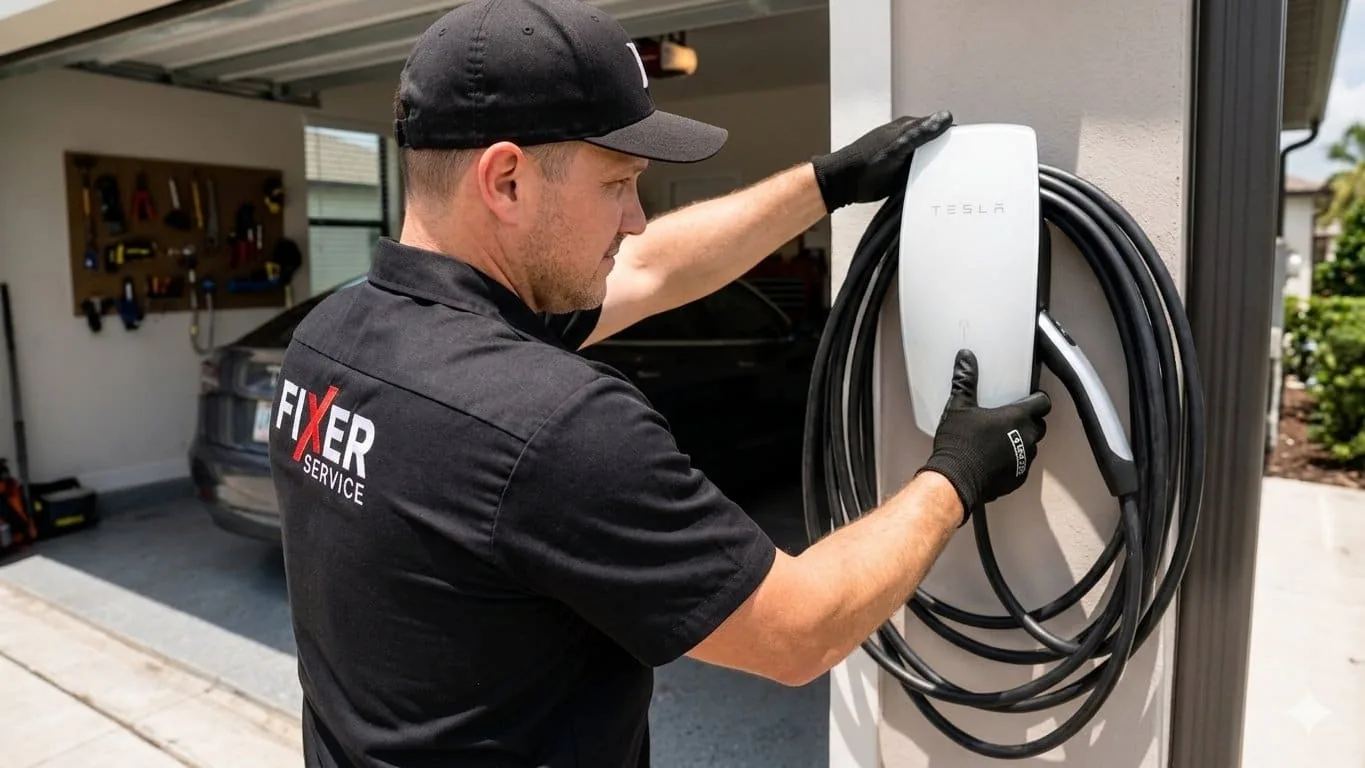
Why a Level 2 Charger Is Worth the Installation Cost
Level 1 charging — the standard 120V outlet — works. Technically. A full charge on most EVs takes 30–50 hours at Level 1. For occasional use or short commutes, that might be fine. For daily driving above 30 miles, you'll consistently leave home undercharged.
Level 2 at 40 amps gives you 25–30 miles per hour. Most EVs go from near-empty to full in four to eight hours overnight. You wake up to a full battery every morning without thinking about it.
The federal tax credit for home chargers (Section 30C) is gone. It ended for chargers placed in service after June 30, 2026. If yours was installed and working by that date, you can still claim it on your 2026 return — the IRS page has the rules. Anything installed now is priced without it. See the cost breakdown for all Tampa Bay scenarios.
Every price here is a starting point. The exact number is written down after the $89 diagnostic, before any work starts.
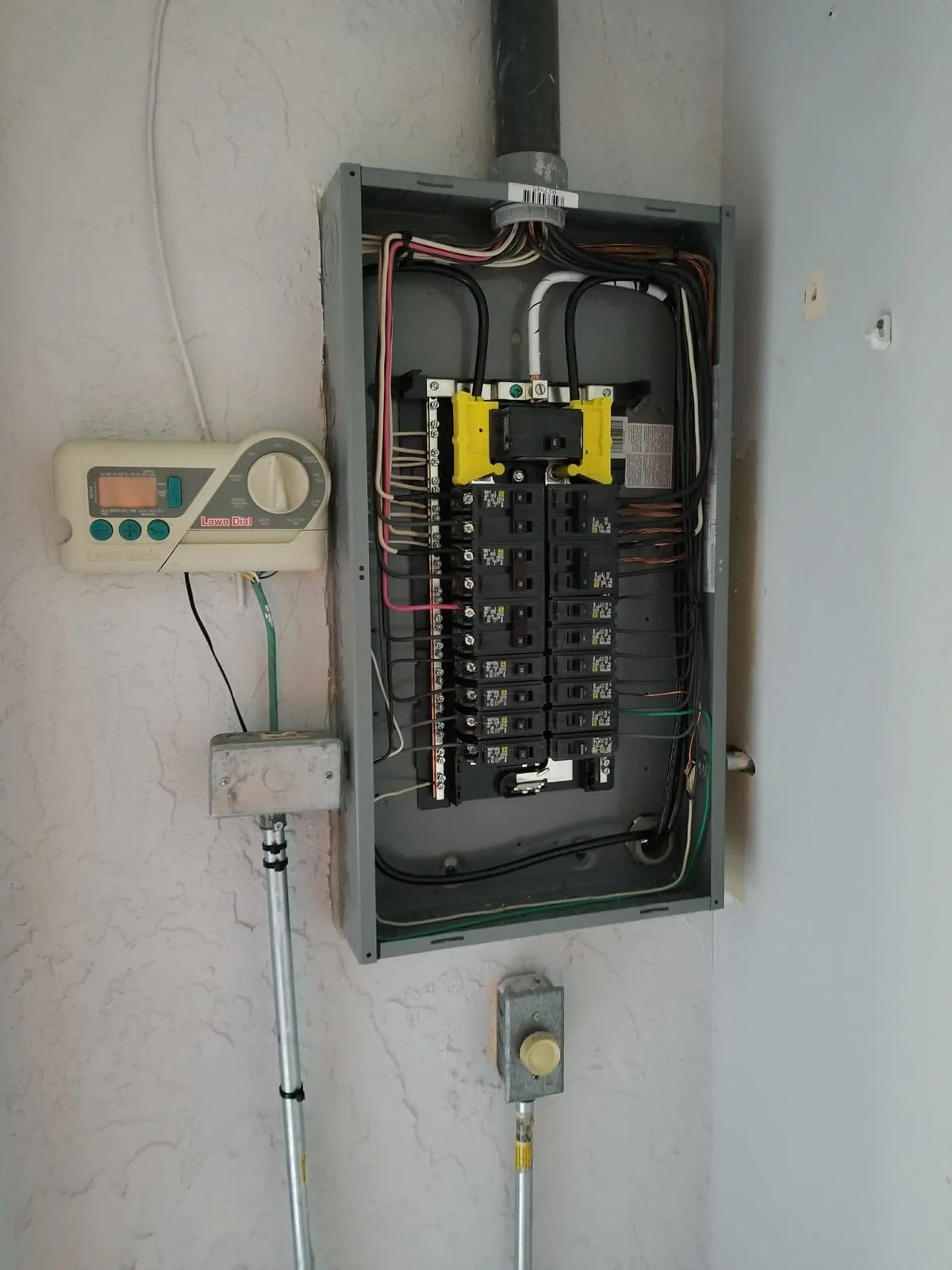
Step 1 — Panel Assessment
Before running any wire, we confirm your panel has available capacity for a 40–50 amp dedicated circuit. A 200-amp panel with typical residential loading usually has room. A 100-amp panel or one that's close to its load limit may not — and adding a 50-amp circuit to an overloaded panel is a fire hazard.
The assessment includes a load calculation. Florida's warm climate means air conditioning runs nearly year-round, which adds meaningful continuous load to residential panels. A panel that looks like it has available slots on paper may not have available amperage once the AC load is factored in.
If the panel doesn't have capacity, we quote a panel upgrade at the same visit. Some customers do both in one trip — if we're already working on the panel, adding the EV circuit at the same time costs less than scheduling two separate visits.
Step 2 — Circuit Installation
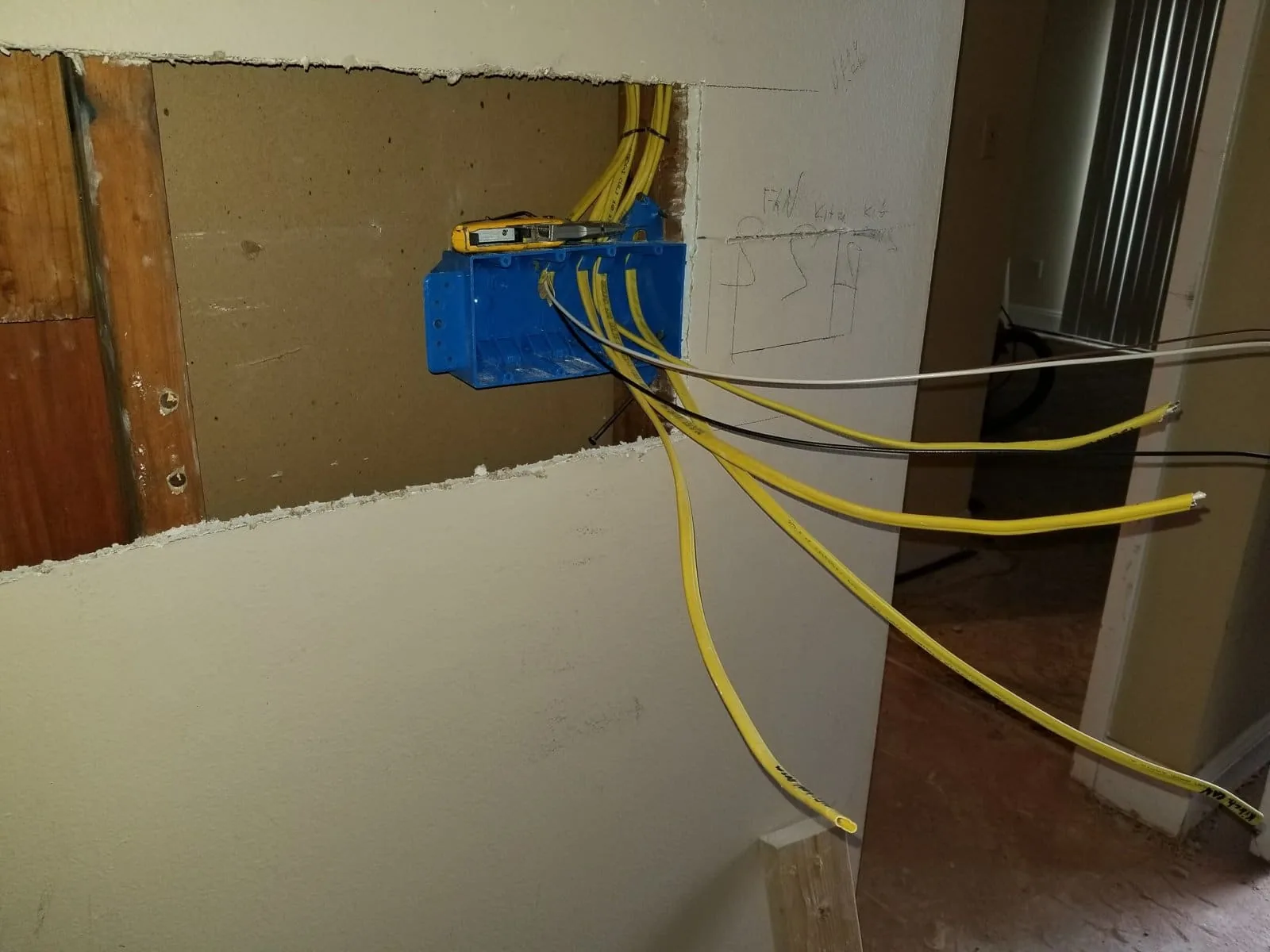
A dedicated 240V circuit runs from the panel to wherever the charger will be mounted — typically in the garage, but sometimes a carport or an exterior wall. The run length is the primary cost variable.
A garage that shares a wall with the main panel is a short conduit run. A detached garage, a carport on the far side of the house, or a charger mounted away from the panel requires more wire and more work. Long runs across a yard require underground conduit and trenching — a separate cost from the circuit installation.
We use conduit on all exposed runs and size the wire for the circuit's full ampacity. Florida's combination of heat, humidity, and occasional moisture means exposed wiring needs proper protection — not just stapled to a wall.
NEMA 14-50 outlet or hardwired: Most chargers connect to a NEMA 14-50 outlet — the same 240V receptacle used for RV hookups and some electric dryers. This gives you flexibility: any brand of plug-in Level 2 charger works, and you can take the charger with you if you move. A hardwired installation connects the charger directly to the circuit without a plug. The Tesla Wall Connector requires a hardwired connection. Installation cost is nearly identical either way.
Step 3 — Charger Mounting and Testing
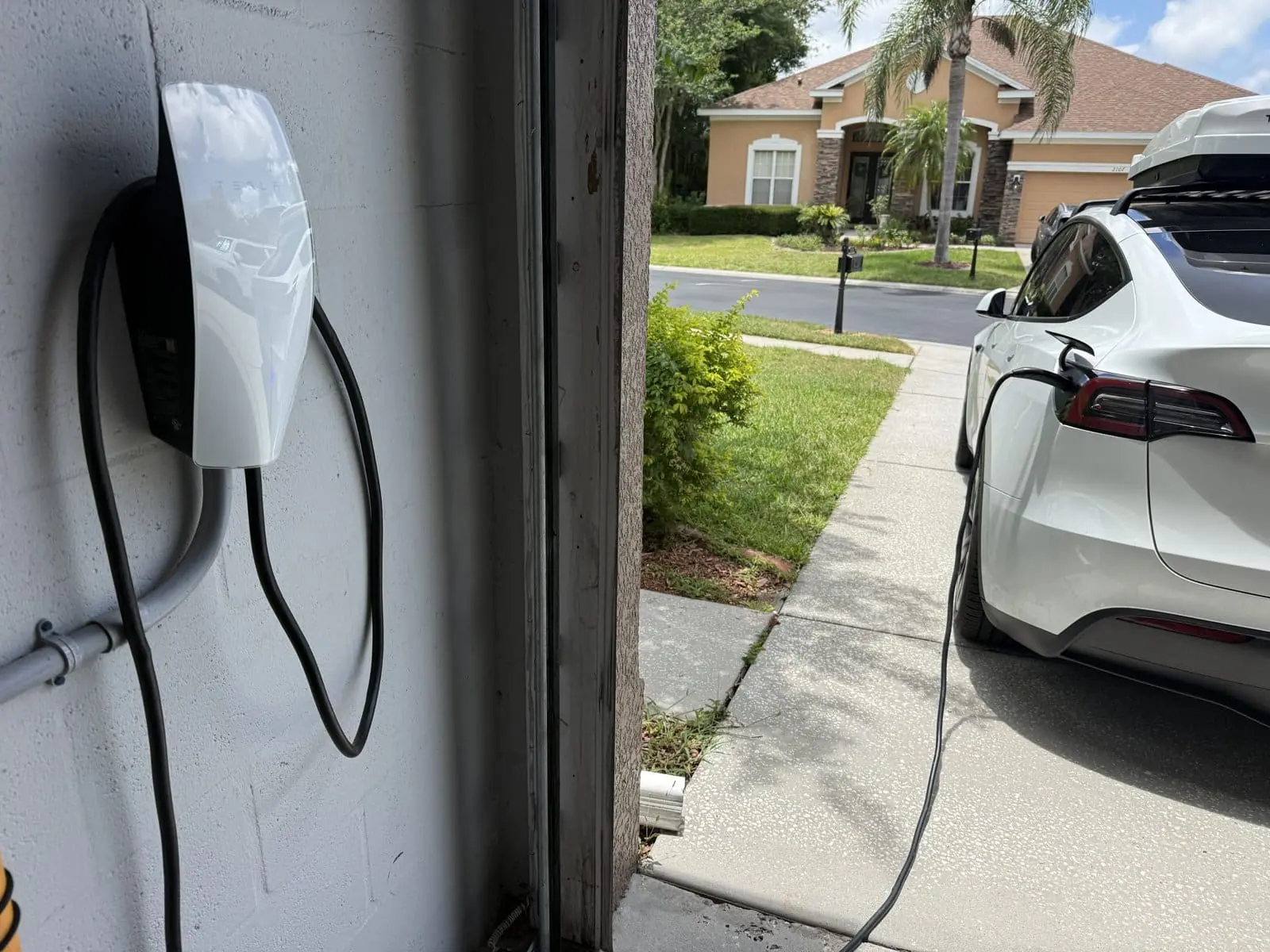
The charger mounts at a height that gives easy access to the cable. For garage installations, this is typically at eye level, positioned so the cable reaches the vehicle's charge port without being stretched. For outdoor installations, mounting height and orientation account for water drainage.
We test the circuit with a meter before connecting the charger, then confirm the charger communicates with the vehicle and that the charge session starts and stops correctly. You get documentation of the installation — the circuit specs, the charger installation, and the permit information — before we leave.
Sometimes the job doesn't go exactly as planned. A commercial refrigerator once needed a condenser fan motor that wasn't on the truck — a different brand, smaller diameter, cut to fit the bracket. Same principle applies here: if the planned conduit path isn't feasible once the wall is opened, we find the path that works. Field experience matters more than a tidy estimate.
Florida-Specific Requirements
Permits and inspections
Florida requires a permit for any new 240V dedicated circuit, including EV charger installations. In Pasco, Hillsborough, and Pinellas counties, the permit starts at $75, depending on the jurisdiction. We pull the permit and schedule the inspection.
The permit matters at resale and for insurance. An unpermitted EV charger installation is an undisclosed alteration that can create problems when you sell the home and may affect homeowner's insurance coverage for any electrical issue tied to the circuit.
The passed inspection documents that the work was done to code by a licensed contractor. License ER-13016759 covers electrical work in all three counties. Verify any Florida electrical contractor's license at the Florida DBPR license lookup.
Outdoor and weatherproof requirements
Chargers mounted outside — carports, exterior walls — require NEMA 3R or NEMA 4X-rated enclosures for the outlet or charger mounting. Florida's combination of humidity, salt air in coastal areas, UV exposure, and summer storm rainfall means an outdoor installation rated for indoor use will fail prematurely.
Most name-brand Level 2 chargers are rated for outdoor installation. We verify the rating before mounting and use weatherproof conduit fittings on all outdoor conduit runs. In coastal areas, stainless steel or galvanized hardware prevents the salt-air corrosion that ruins standard hardware within a year or two.
Lightning surge protection
Florida leads the country in lightning strikes per square mile. A nearby strike can send a voltage spike through the home's wiring that damages the charger's electronics — and isn't always covered under the manufacturer's warranty.
A whole-home surge protector at the panel combined with a point-of-use surge protector at the charger provides the most complete protection. The charger costs $300–$500 to replace. A whole-home surge protector starts at $300 installed. We discuss this on every EV charger installation.
Solar integration
Homes with rooftop solar can time EV charging to coincide with peak solar production, reducing the net electricity cost of charging. Smart chargers — ChargePoint Home Flex, Wallbox Pulsar Plus, and others — integrate with solar system monitoring apps and can throttle charging current based on available solar output.
This doesn't change the installation process, but it changes which charger makes sense for your home. Mention your solar setup during the assessment.
Smart Charging Features
Modern Level 2 chargers do more than charge. Smart chargers connect to Wi-Fi and let you schedule charging during off-peak utility hours, track energy usage per session, and receive alerts if charging stops unexpectedly.
In Pinellas and most of Pasco, Duke Energy Florida pays a $7.50 monthly bill credit for charging on a Level 2 charger during off-peak hours. The app integration on chargers like the ChargePoint Home Flex or JuiceBox 40 makes this scheduling automatic once set up.
If smart features matter to you, mention it at the diagnostic. The outlet or hardwired circuit is the same either way — the charger choice is what changes.
Does an EV Charger Increase Home Value?
Homes with permitted Level 2 charger installations sell faster in markets where EV ownership is growing — and Tampa Bay EV registrations have increased steadily. The passed inspection copy documents the improvement as a code-compliant addition rather than an undisclosed alteration.
That documentation is what protects the value. An unpermitted charger is a liability at closing. A permitted one is an asset. They look identical from the garage wall.
Compatible Charger Brands
Tesla Wall Connector, ChargePoint Home Flex, JuiceBox 40, Grizzl-E, Wallbox, Emporia Level 2, and any NEMA 14-50 plug-in or hardwired Level 2 charger. You can supply the charger or we can source one.
For most Florida homeowners without a specific preference: the Grizzl-E or Emporia offers reliable hardware at a reasonable price point and handles outdoor installation well. The ChargePoint Home Flex has the best app integration if smart charging features matter. The Tesla Wall Connector is the right choice for Tesla owners who want full 48-amp output.
Cost and Timeline Summary
Labor and materials for a standard garage installation with a panel that has capacity: from $400, not including the charger unit. Add the charger and installs start at $1,000 all-in. Long conduit runs add from $300. A detached garage requiring a subpanel adds from $800 before the EV circuit.
Installation takes two to four hours. The county permit inspection happens within a few days — we schedule it.
We tell you the price before anything starts. You say yes or you say no. If you say no, you pay the $89 diagnostic and we leave.
For a full cost breakdown by scenario, see this page. EV charger service details are here.
Tony
Licensed Electrical Contractor · ER-13016759 · Tampa Bay, FL
Owner of My Fixer LLC, serving Tampa Bay since 2018. 337 Google reviews at 4.9 stars.
About Anatoliy →Frequently Asked Questions
Does Florida require a permit for home EV charger installation?+
Yes. Pasco, Hillsborough, and Pinellas counties all require a permit and inspection for a new 240V dedicated circuit. The permit starts at $75. We pull the permit and schedule the inspection. An unpermitted installation creates problems at resale and may affect homeowner's insurance coverage.
How long does a home EV charger installation take in Florida?+
Two to four hours for a standard garage installation — circuit run, charger mounting, and testing. The county permit inspection happens separately, within a few days of the installation.
Does my panel need to be upgraded for an EV charger?+
Not always. A 200-amp panel with available ampacity usually accommodates a 40–50 amp circuit. A 100-amp panel or a loaded panel may not. Florida's year-round AC load means panels run closer to capacity than in cooler climates. We check during the $89 assessment and tell you upfront.
Can I install an EV charger outside in Florida?+
Yes, but the installation requires weatherproof-rated components — NEMA 3R or NEMA 4X for the outlet or charger mount, weatherproof conduit fittings, and corrosion-resistant hardware for coastal locations. Most name-brand Level 2 chargers are rated for outdoor use. We verify ratings before mounting.
What is a NEMA 14-50 outlet and do I need one?+
A NEMA 14-50 is a 240V receptacle — the same type used for RV hookups and some electric dryers. Most plug-in Level 2 chargers connect to one. It gives you flexibility: any compatible charger brand works, and you can take the charger with you if you move. The alternative is a hardwired connection, which the Tesla Wall Connector requires. Installation cost is nearly the same either way.
Should I add surge protection with my EV charger in Florida?+
Yes. Florida has the highest lightning strike frequency in the country. A surge from a nearby strike can damage EV charger electronics and isn't always covered under the manufacturer's warranty. A whole-home surge protector at the panel combined with a point-of-use device provides the best coverage. The protector starts at $150 installed.
Will a Level 2 charger significantly increase my electric bill?+
At Florida's average electricity rate and a vehicle averaging 3–4 miles per kWh, charging 30 miles per day costs roughly $1.00–$1.30 per day — about $30–$40 added to the monthly bill for daily driving. Smart chargers that schedule off-peak charging can reduce this further.
Is there still a federal tax credit for EV charger installation?+
No. The Section 30C credit ended for chargers placed in service after June 30, 2026. If your charger was installed and working by that date, you can still claim 30% of the cost, up to $1,000, on your 2026 return using Form 8911. Anything installed after that does not qualify.
Can I install an EV charger in a rental property in Florida?+
Yes, but you need the property owner's written permission. The permit application requires the property owner's information. The process is otherwise the same as any other installation.
Have a Question?
Ask our licensed electrician directly. Electrical and appliance repair specialist. You'll get a reply within minutes.