
Generac generator installation takes one to two days on-site: one day for the concrete pad, gas line, and rough electrical, one day to set the unit, wire the automatic transfer switch, and test it. The part that actually eats time isn't the labor — it's the permit. Site assessment to final inspection sign-off runs three to six weeks in Pasco, Hillsborough, and Pinellas Counties, and most of that is waiting on the county, not the crew.
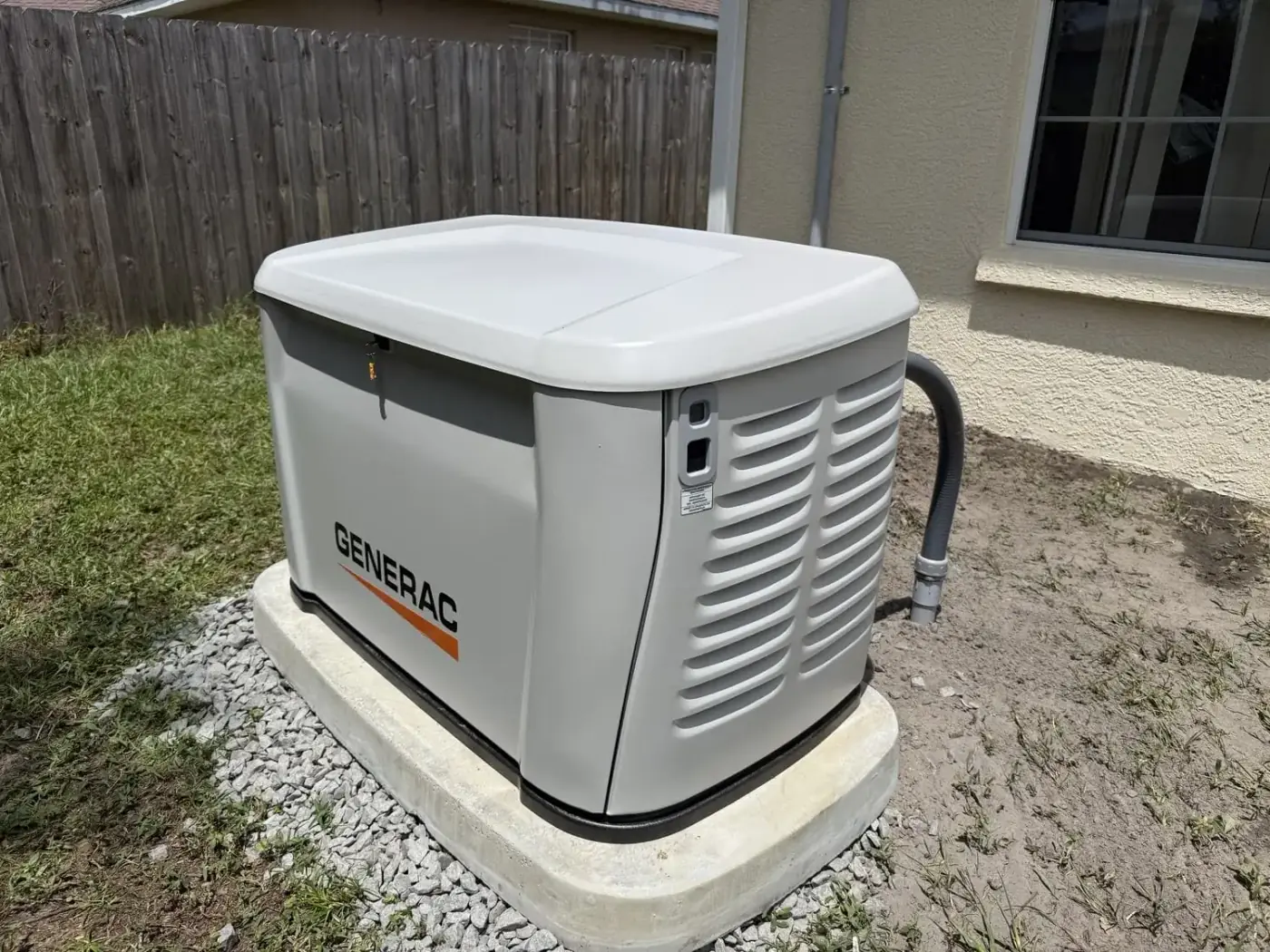
Every photo in this post is from one real install — the pad, the trench, the wiring, the permit tag stuck to the panel when the inspector signed off. Nothing here is stock photography. Hidden information helps no one: Tony has trained five to seven electricians for free, on the job, over the years, and the work never dried up because of it. Here's exactly what happens, in order.
What Shows Up Before Install Day
The generator arrives first — usually days before the crew does. It's delivered crated on a pallet, and it sits in the garage or driveway until installation day. A 22kW Generac Guardian unit ships in a box roughly the size of a large refrigerator standing on its side, and it's heavy enough that it stays on the pallet until the crew is ready to move it with a hand truck and dolly straps.
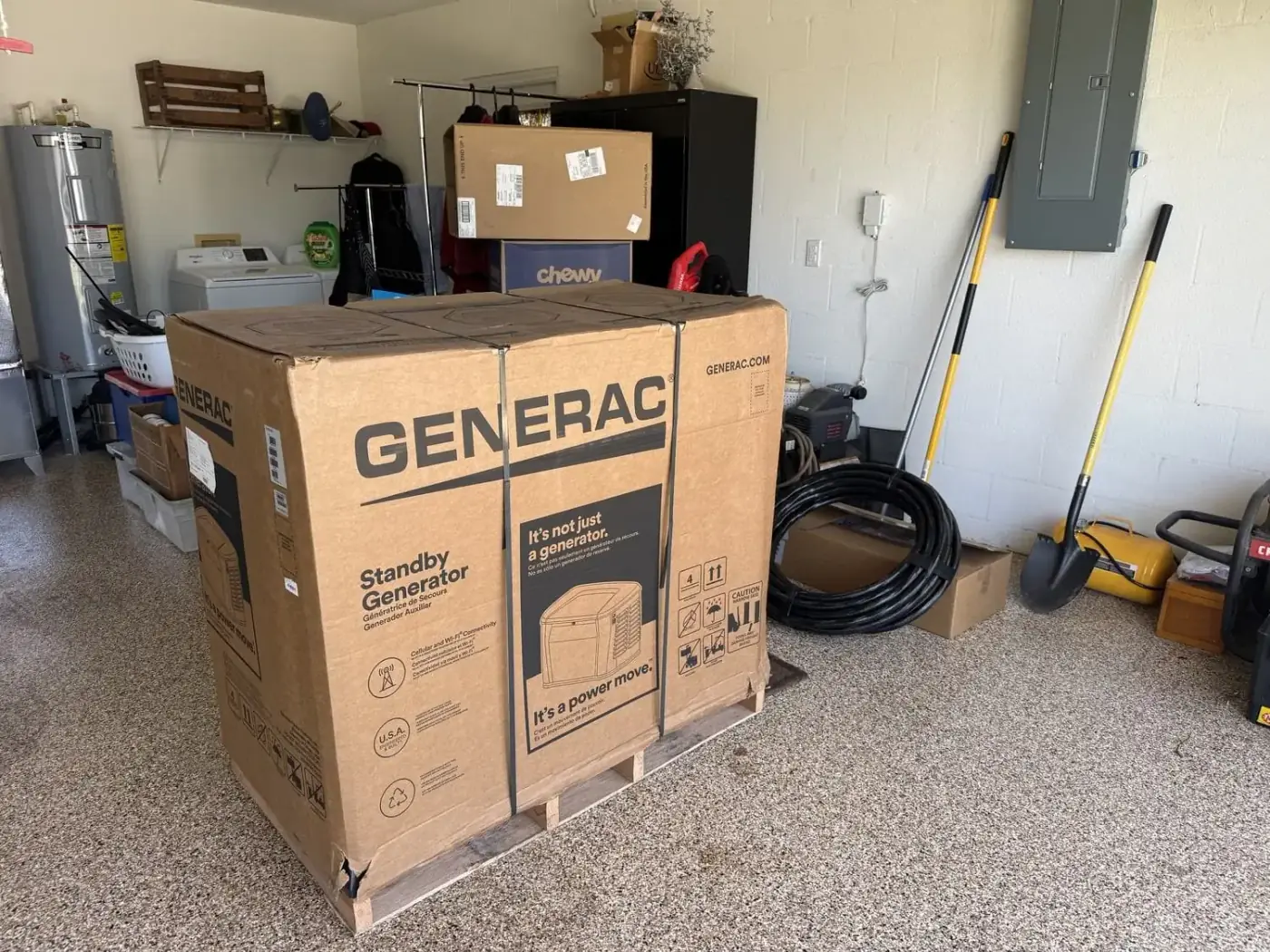
This is also when the site assessment happens, if it hasn't already — confirming the generator's location meets clearance requirements from windows, doors, and property lines, checking whether the existing panel has room for the transfer switch, and sizing the unit against the home's critical loads. The permit gets filed off the back of this visit, not on install day. Filing early is what keeps the whole project moving instead of stalling at the county.
Sizing the Unit
The load calculation isn't just adding up appliance wattage. Running watts and surge watts are different numbers — a central AC compressor draws far more current for the first second or two of startup than it does once it's running, and a generator sized only to the running load will stall or trip on that surge. The assessment covers refrigeration, the AC compressor's starting amps, a well pump if the home has one, and whatever else is on the "must stay on" list. Get the sizing wrong here and it shows up on day two as a generator that can't carry the house — not something anyone wants to discover mid-storm.
Day One — Pad, Gas Line, and Rough Electrical
Setting the Pad
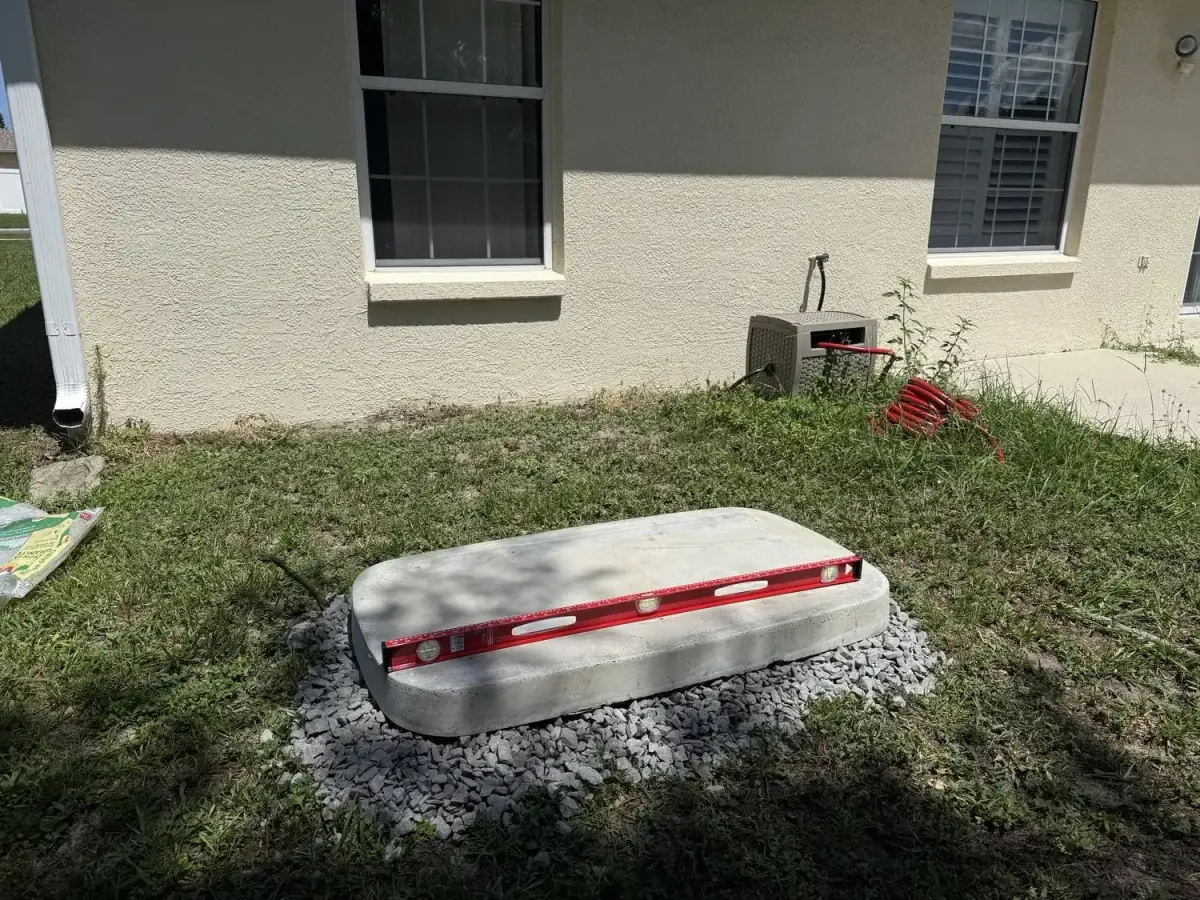
Generac units sit on a precast pad, not a poured slab — that matters for the timeline because there's no cure time. The pad goes down on a leveled gravel bed, checked with a level on both axes, and the generator can be set on it the same day if the schedule allows. No waiting on concrete to set is one of the reasons a two-day install is realistic instead of a week-long one.
Running the Gas Line
A whole-home standby unit ties into natural gas or propane, and that means a trench from the meter or tank to the pad. The line gets buried to code depth, sleeved where it crosses under anything, and pressure-tested before it's connected to the generator. This is licensed gas work, not something bundled in as an afterthought — a bad connection here is a safety issue, not a warranty issue.
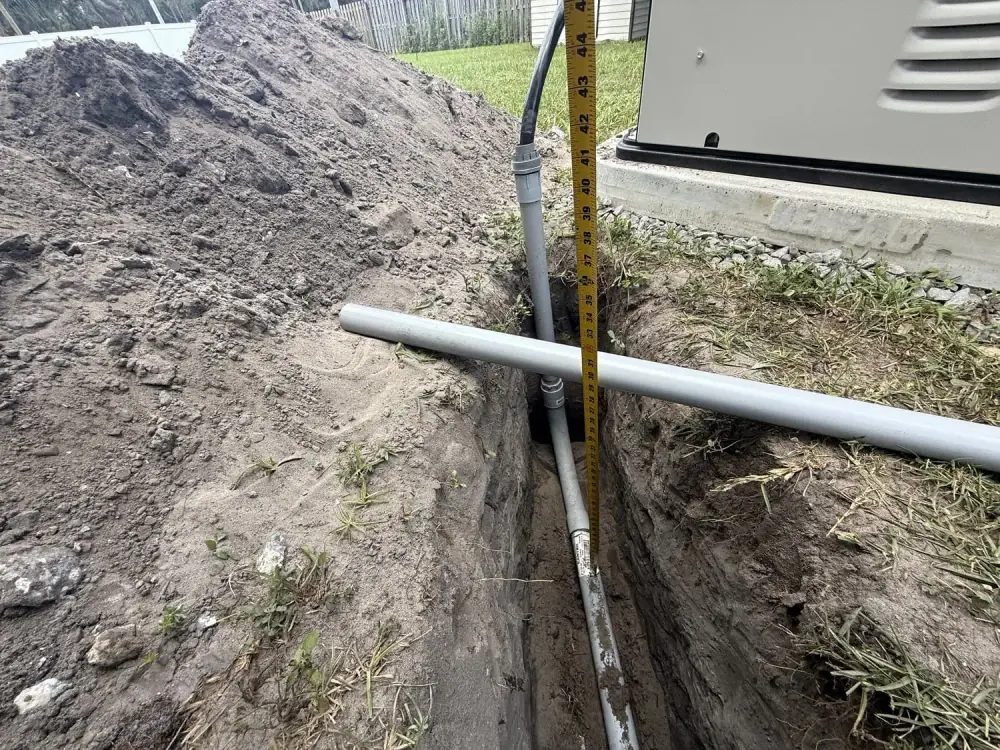
Depth gets checked against code at more than one point along the run, not eyeballed once at the trench opening — the tape measure comes out at every joint.
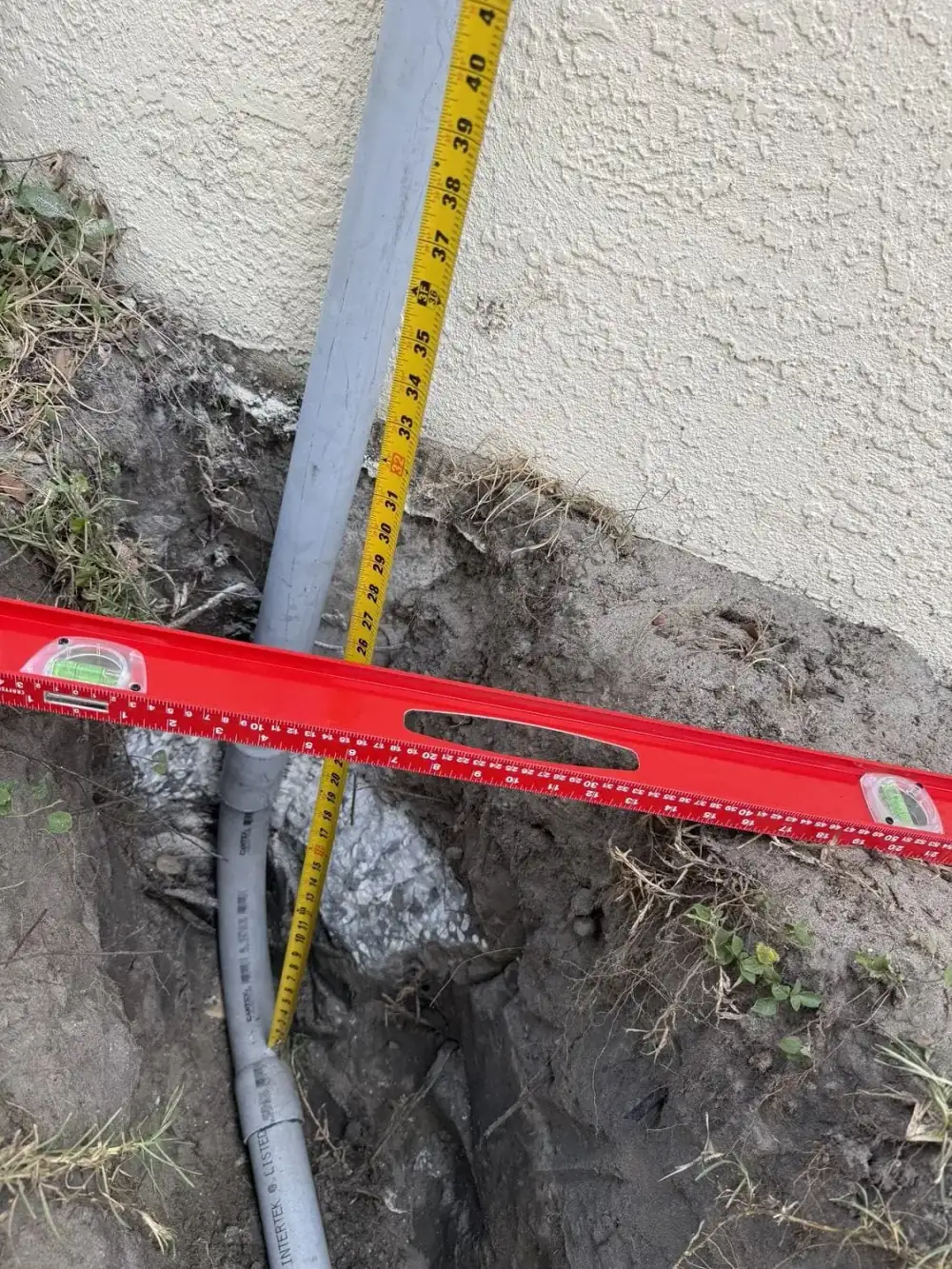
Rough Electrical Conduit
While the trench is open, conduit gets run from the automatic transfer switch location back to where the generator will sit — both the load-carrying conductors and the low-voltage control wire that lets the ATS start the generator automatically. Getting this run in on day one means day two is connection work, not more trenching.
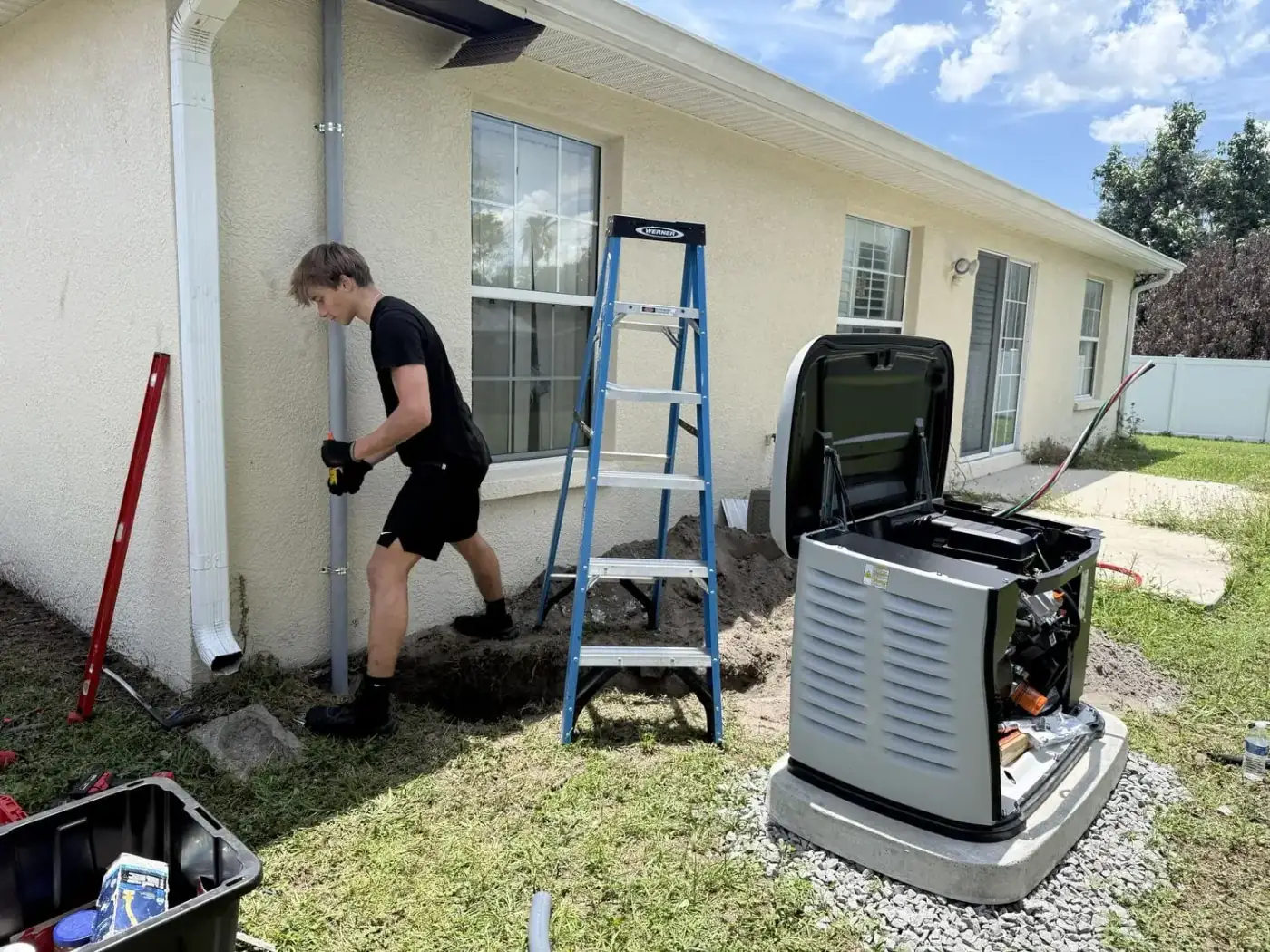
Day Two — Setting the Generator and Wiring the Transfer Switch
Positioning and Anchoring
The unit gets lifted onto the pad, leveled again, and anchored. The gas stub-up and conduit from day one are already in place, so this step is mechanical, not exploratory — everything lines up because it was planned that way from the site assessment.
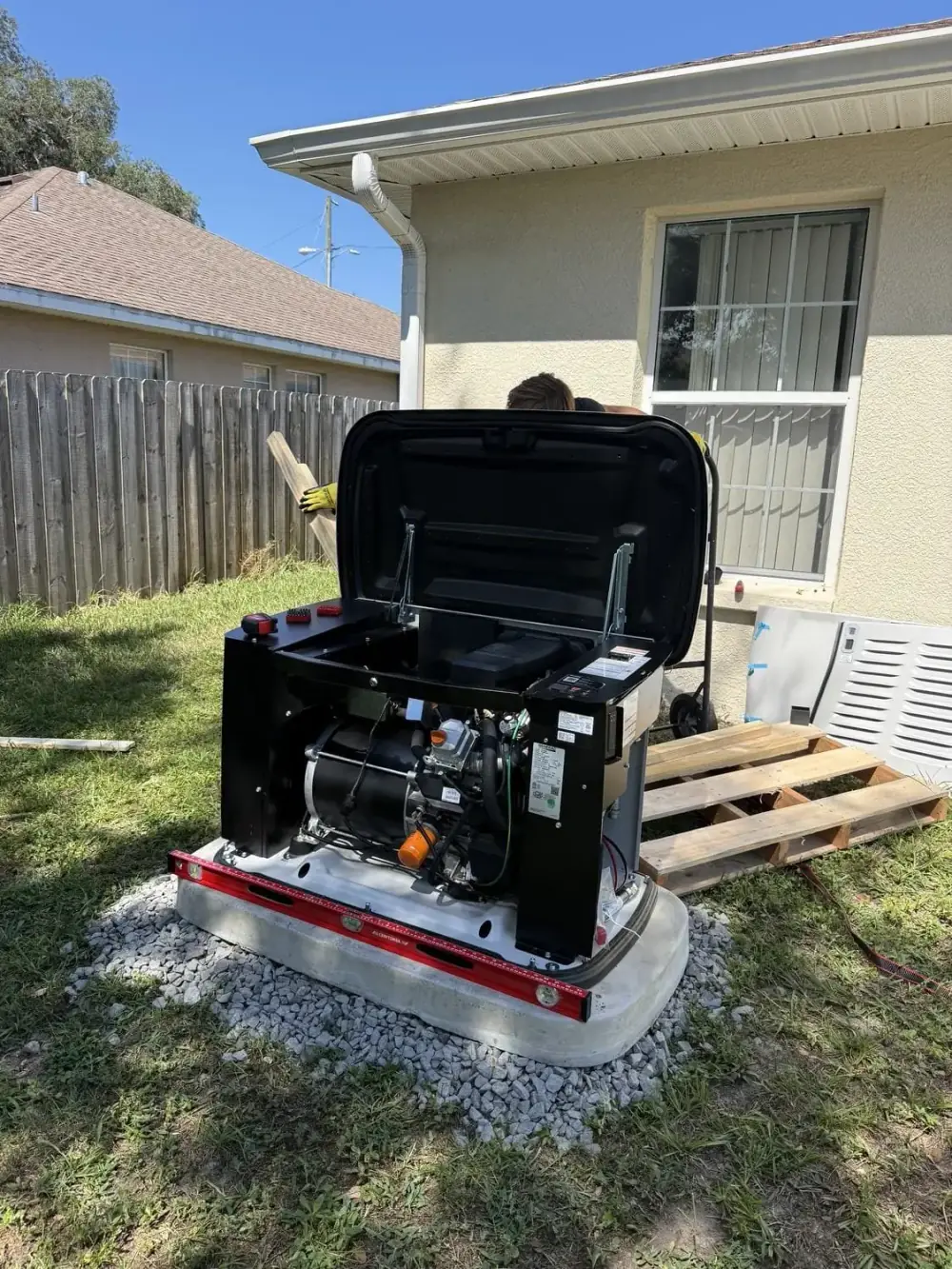
Wiring the Automatic Transfer Switch
Getting the load leads from the panel into the ATS, and the control wiring from the ATS to the generator, means working inside a cabinet not built for a grown adult to climb into. Half the job is done leaning through the open access panel, one boot still on the ground, one knee braced against the frame. What you won't do to land a clean connection.
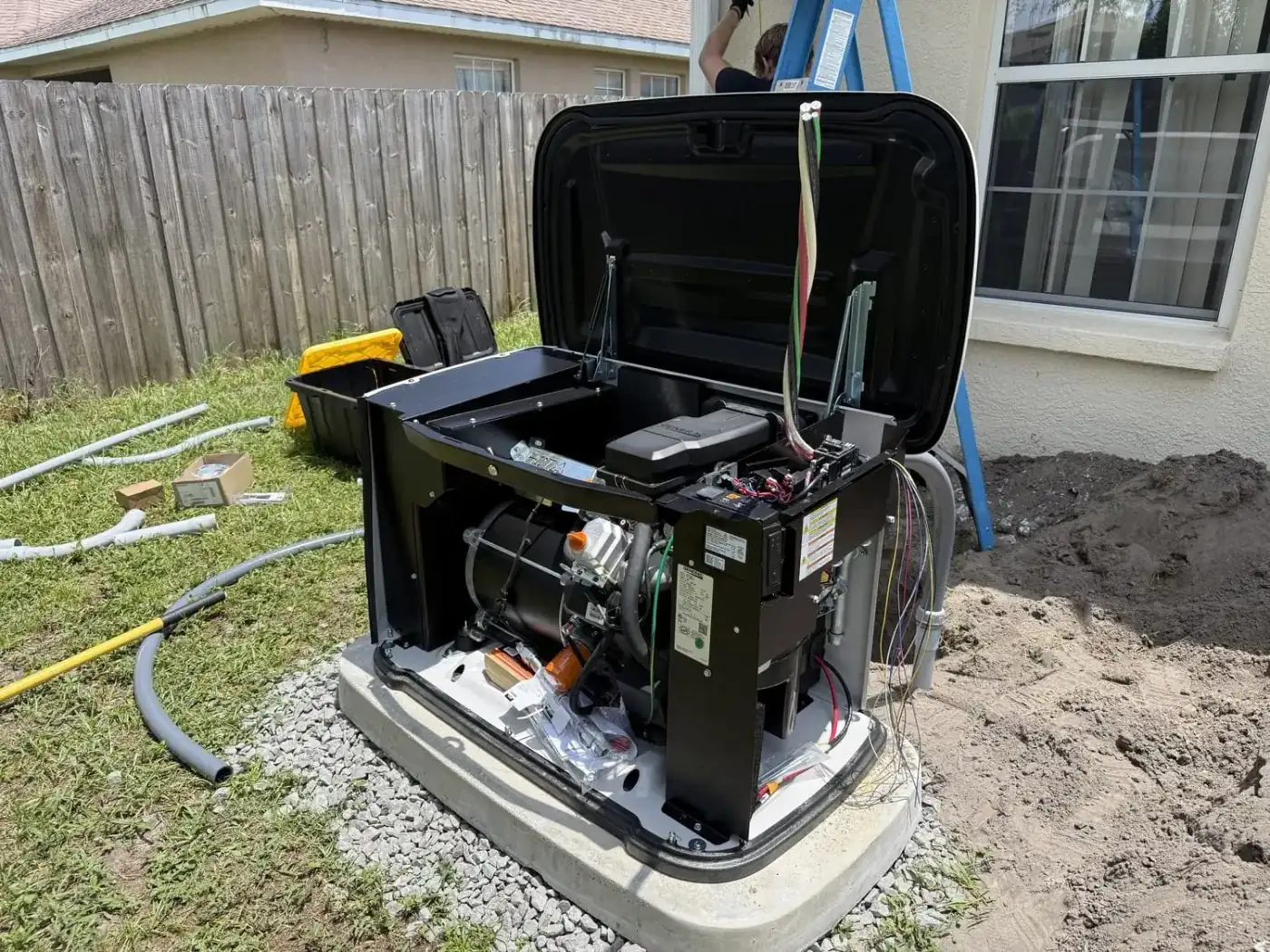
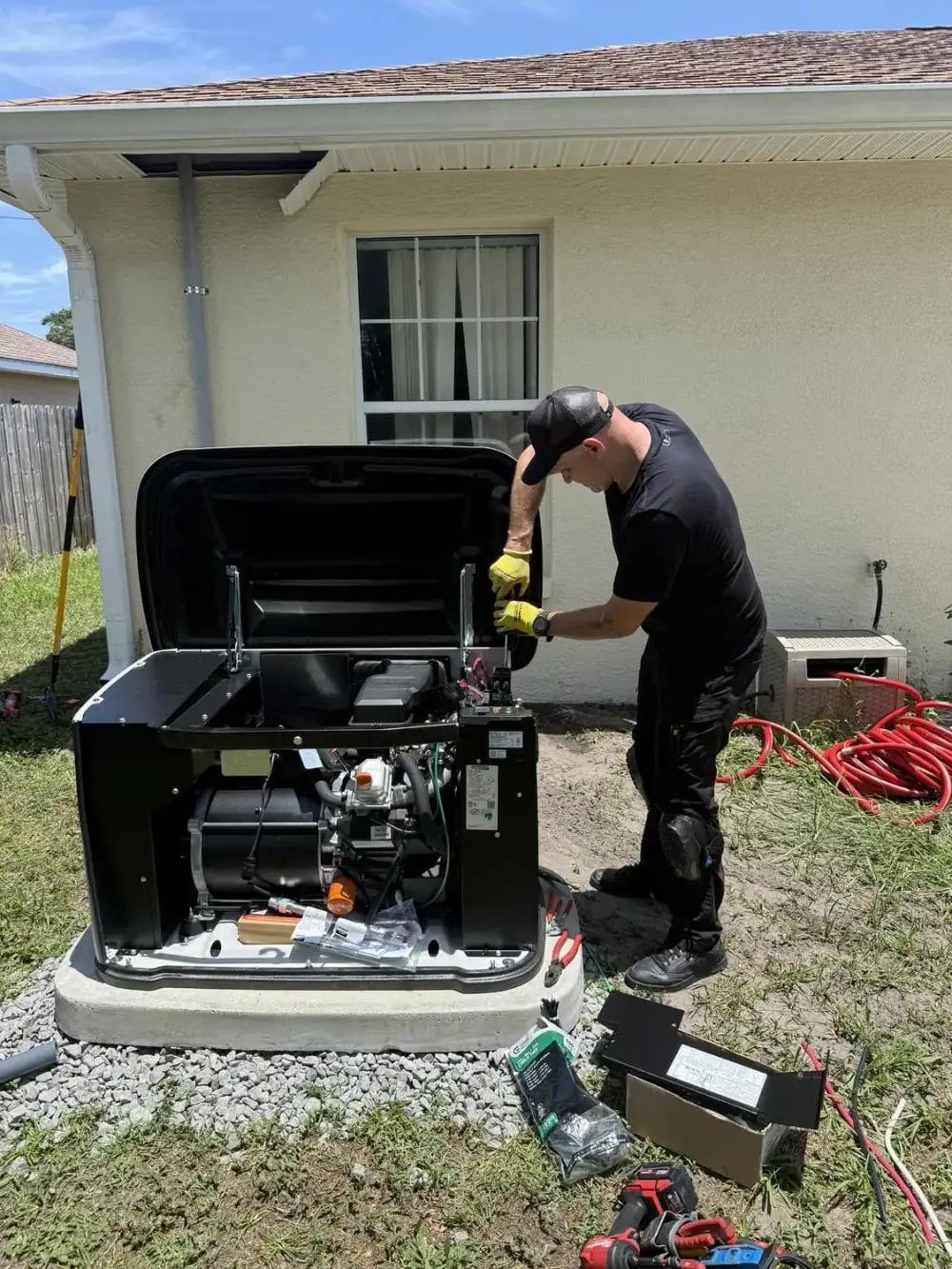
Every terminal in that cabinet is labeled and torqued to spec — transfer contacts, neutral, DC control voltage — because a loose connection here is the difference between a clean automatic transfer and a callback.
Tying Into the Main Panel
The ATS gets connected to the home's main panel with a breaker sized to the generator's output. This is the step that reveals whether a panel upgrade is needed first — if the panel is already full, undersized, or an older Federal Pacific or Zinsco unit, that gets flagged and addressed before the generator connection is finished, not discovered after.
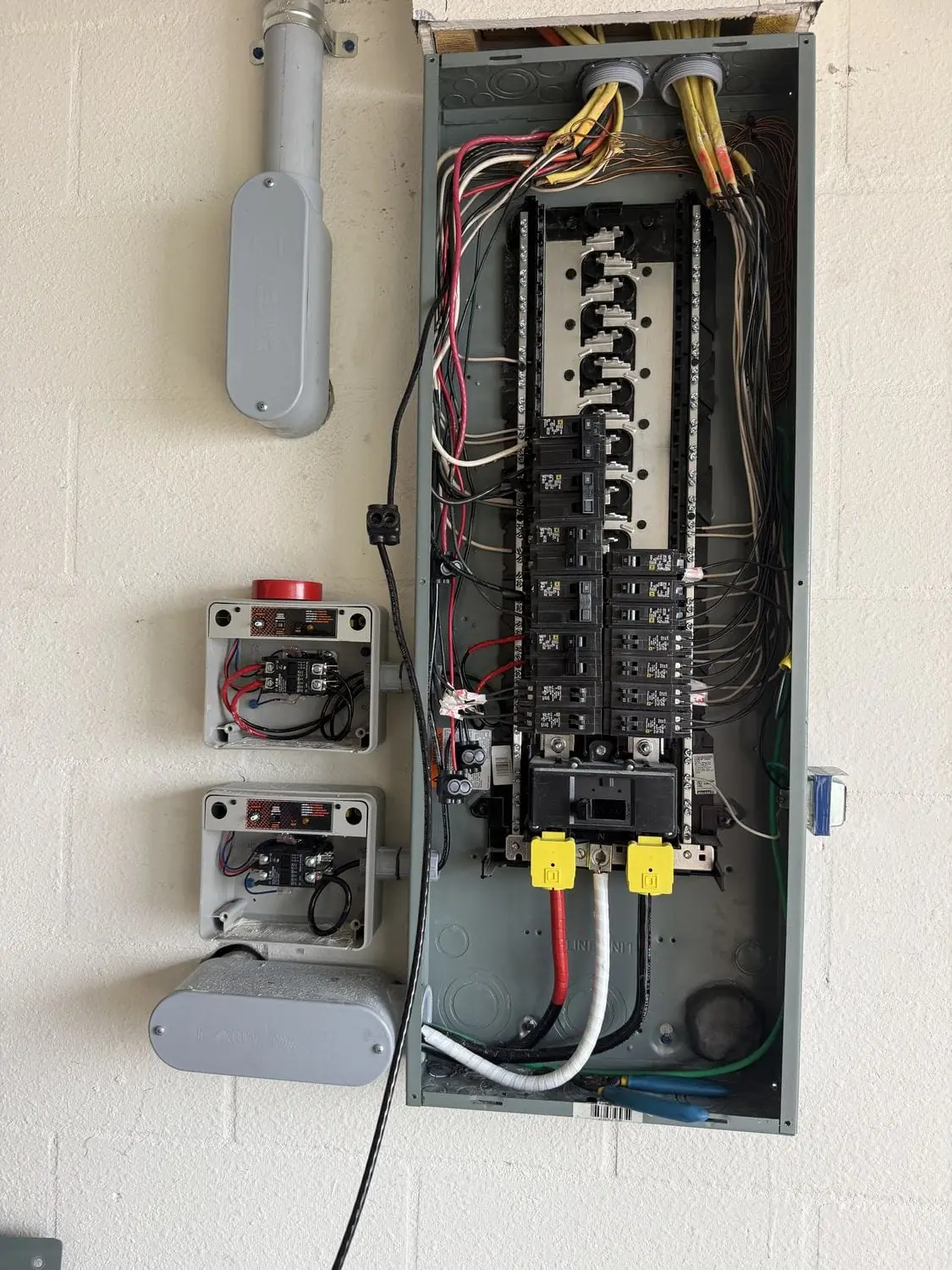
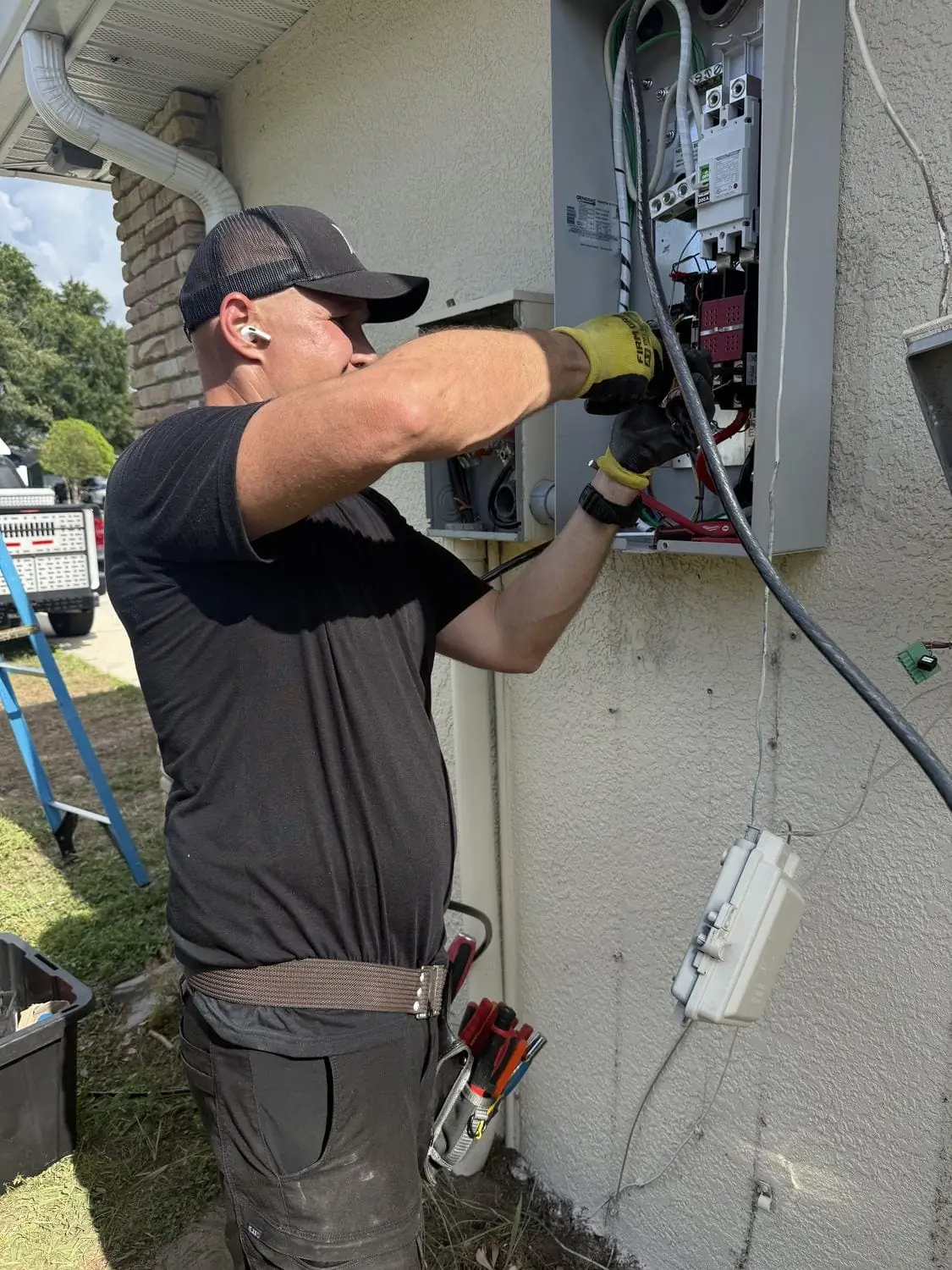
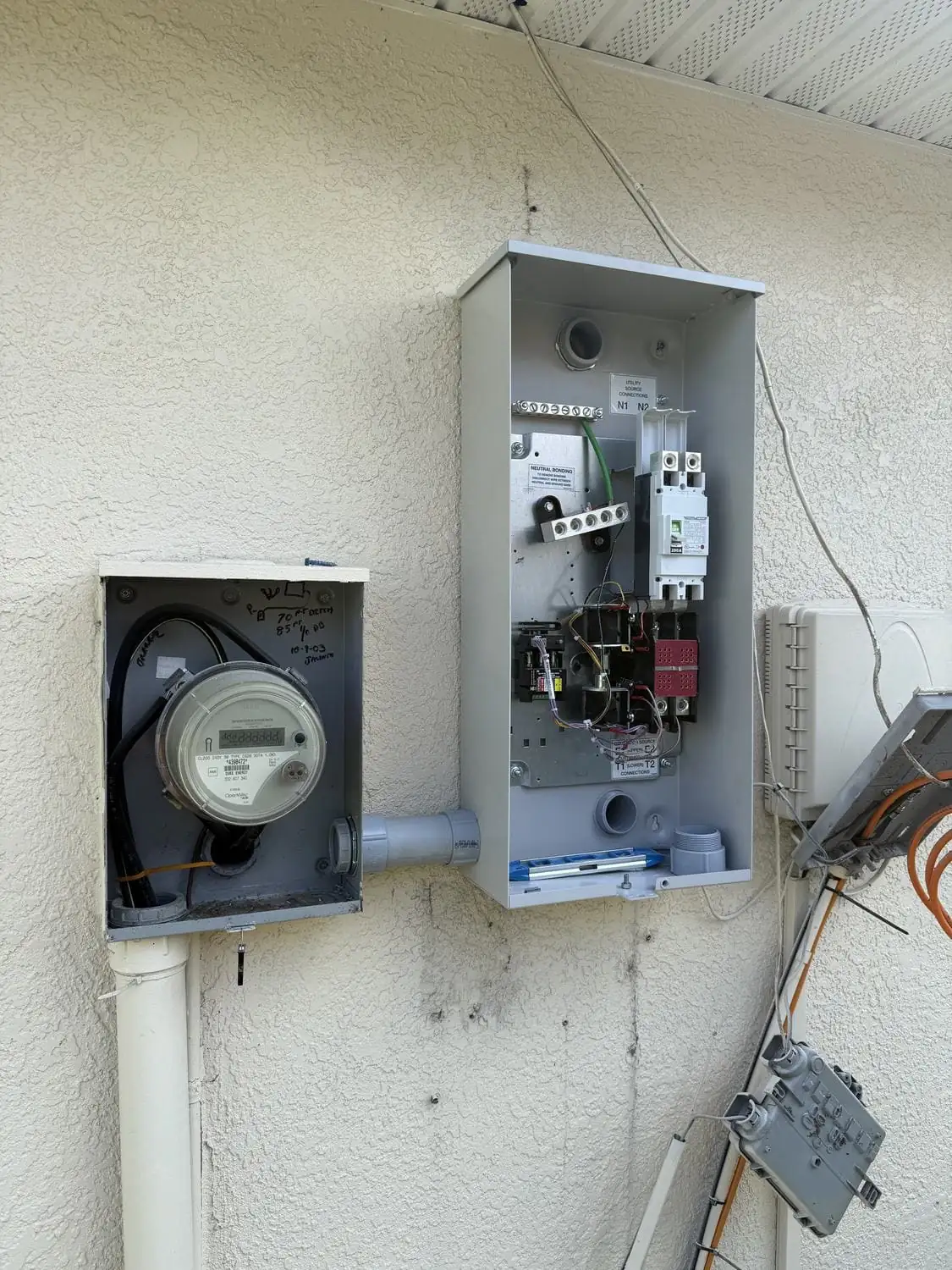
On this job the ATS shared a wall with the utility meter and a separate combination disconnect — worth a look if you're wondering what "the panel" actually covers on a home with an add-on service like this one.
Testing Before the Crew Leaves
Before anyone signs off, the technician checks amperage on each leg with a clamp meter to confirm the load is balanced and nothing is pulling more current than it should. Then comes the real test: killing utility power at the main breaker to simulate an outage. A properly wired ATS senses the loss of utility voltage and starts the generator within about ten seconds, then transfers the load automatically once the unit is up to speed — no one touches a switch.
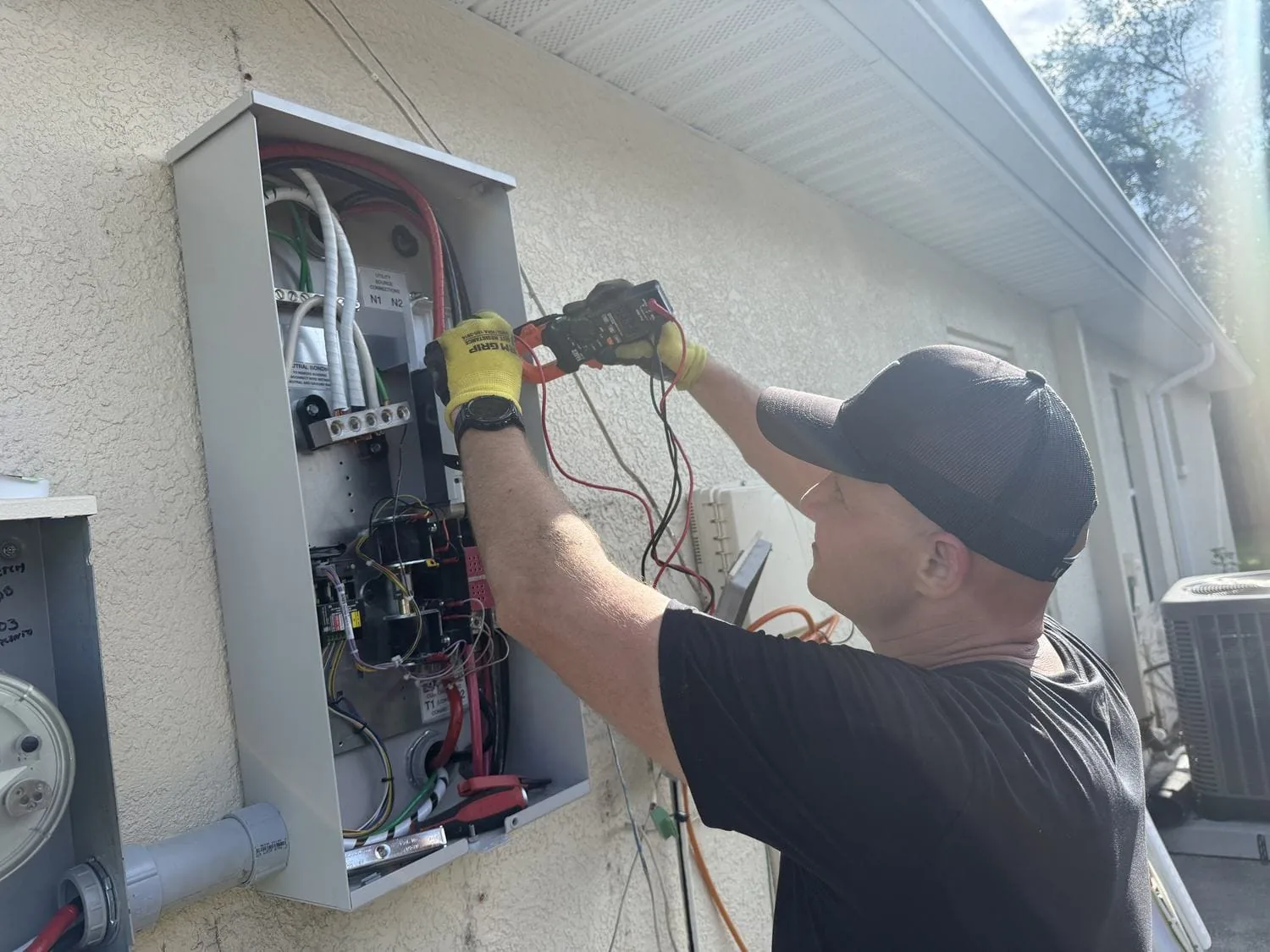
If the transfer isn't clean — a delay, a flicker, an uneven load — that gets corrected before the crew packs up. It does not get left as "should be fine."
What Happens After the Crew Leaves
A Generac unit runs a self-test on its own — a short weekly cycle where it starts, runs briefly, and shuts back down, checking oil pressure, battery voltage, and the charging system without any input from the homeowner. That's built in, not something to schedule.
Annual professional maintenance is a separate requirement, and it's the one homeowners tend to forget: oil change, spark plug, air filter, battery test. Manufacturers commonly tie warranty coverage to that annual service being performed and documented. Skipping it doesn't just risk a mechanical failure — it can void the coverage that made the generator worth the price in the first place.
The Permit and Inspection Timeline
This is the part of the project that actually takes weeks, not the wiring. A generator installation permit is required in Pasco, Hillsborough, and Pinellas Counties, and permit review typically runs two to four weeks from filing to approval. Once the physical installation is done, the county schedules a separate inspection visit — the orange permit tag stays posted at the panel until that inspector signs off.
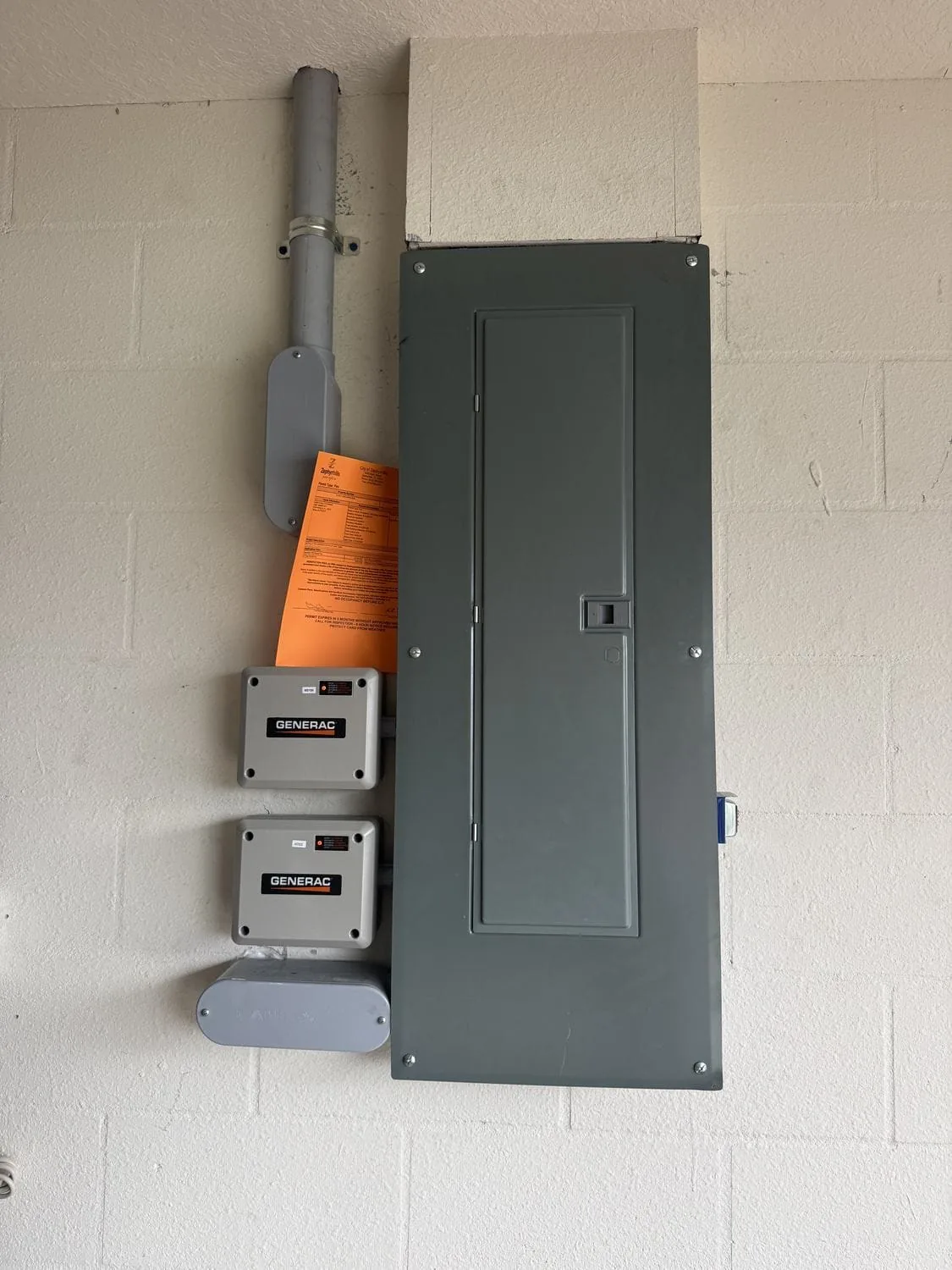
NFPA 70 sets the clearance requirements an inspector checks: distance from windows, doors, and utility meters, plus proper bonding and grounding at the transfer switch. Before signing a contract with anyone, it's worth confirming their license directly through the Florida contractor license lookup rather than taking a truck wrap's word for it.
What Can Add Days to the Timeline
An undersized or outdated panel. If the existing panel can't take the transfer switch connection without an upgrade, that's additional work scheduled ahead of the generator, not squeezed into the same day. A Federal Pacific or Zinsco panel gets flagged at the site assessment specifically so this doesn't turn into a surprise on install day.
No propane tank on-site yet. Natural gas connects straight to the existing utility line, so there's nothing to wait on. Propane needs a tank delivered and set before the gas trench work can finish, which is a separate vendor on a separate schedule — worth confirming before the install date gets booked, not after.
HOA approval. Some communities require sign-off on generator placement before work starts. That approval process runs in parallel with the permit, but it can outlast it if it's not started early — HOA boards don't run on the county's clock.
Unexpected ground conditions. Roots, irrigation lines, or rock in the gas trench path add time on day one that a flat, clear yard wouldn't. It's the kind of delay that's impossible to price into the quote in advance and gets handled on the spot.
Storm-season backlog. Installers across Tampa Bay book solid from May through September. We broke down the full cost and hurricane-season timing separately — the short version is that a July quote schedules for September, and a post-storm quote can push eight to twelve weeks.
Before You Sign — Timeline Questions Worth Asking
When does the permit get filed relative to the contract? It should be within days of signing, off the site assessment — not held until install day. A permit filed late is the single biggest reason a project timeline slips.
Is the propane tank staged, if that's the fuel source? If not, that's a scheduling dependency outside the installer's control, and it belongs in the timeline conversation before a date gets booked, not after.
Who's pulling the permit — you or the installer? It should be the installer. A homeowner-pulled permit on a licensed trade is a red flag, not a cost-saving move.
Generac Installation Timeline vs. Total Project Timeline
The labor is two days, sometimes one if the site is simple and the crew doesn't hit anything unexpected in the trench. The full project — from the site assessment that starts the permit clock to the county inspector removing the last hold — runs three to six weeks in Pasco, Hillsborough, and Pinellas. That gap between "the work" and "the project" is permits and inspections, not anyone standing around.
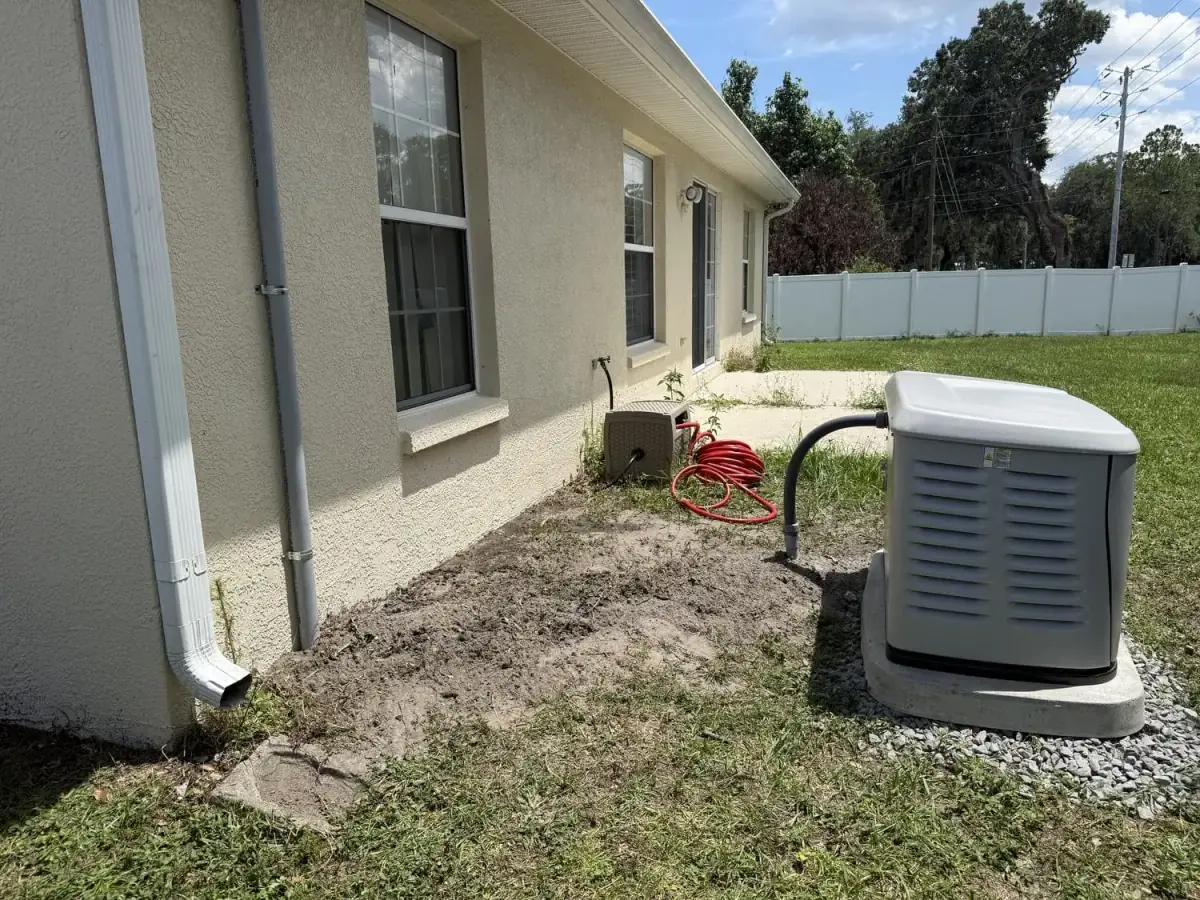
Carbon monoxide is the reason none of this gets rushed or shortcut. Standby generators are outdoor units by design, and clearance from windows and doors isn't a suggestion — the Consumer Product Safety Commission publishes specific generator placement guidance for exactly this reason.
Questions about a Generac installation timeline for your own home: call (727) 222-9892 or review our electrical services. If a panel assessment needs to happen first, that's part of the same site visit — not a second trip.
Tony
Licensed Electrical Contractor · ER-13016759 · Tampa Bay, FL
Owner of My Fixer LLC, serving Tampa Bay since 2018. 337 Google reviews at 4.9 stars.
About Anatoliy →Frequently Asked Questions
How long does Generac generator installation take?+
The physical labor takes one to two days: one day for the pad, gas line, and rough electrical, one day to set the generator, wire the automatic transfer switch, and test it. The full project — including the permit and county inspection — runs three to six weeks in Pasco, Hillsborough, and Pinellas Counties.
What happens on the first day of a Generac installation?+
Day one is the concrete pad, the gas line trench from the meter or tank to the pad, and the rough electrical conduit run from the panel location to where the generator will sit. The generator itself is usually set and wired on day two.
Does the concrete pad need time to cure before the generator is set?+
No. Generac units sit on a precast pad, not a poured slab, so there's no cure time. The pad goes down on a leveled gravel bed and the generator can be set on it the same day.
Do I need a permit for a Generac generator in Florida?+
Yes. A permit is required in Pasco, Hillsborough, and Pinellas Counties. It's filed after the site assessment, typically takes two to four weeks to approve, and a county inspector has to sign off after the physical installation is complete before the permit tag comes down.
How does the automatic transfer switch know when to start the generator?+
The ATS continuously monitors utility voltage. When it senses an outage, it starts the generator automatically — typically within about ten seconds — and transfers the home's load once the unit is up to speed. No one has to flip a switch.
Can the Generac installation timeline be shortened?+
The physical labor is fairly fixed at one to two days. What can be shortened is the lead-up: getting the site assessment and permit filed early, confirming the panel has capacity for the transfer switch beforehand, and having a propane tank already on-site if that's the fuel source.
Do I need to be home for the entire installation?+
You need to be there for the site assessment and the final test and walkthrough, when the technician demonstrates the simulated outage and explains the weekly self-test. You don't need to be present for every hour of trenching and wiring in between.
What does the technician test before leaving the job?+
Amperage on each leg with a clamp meter to confirm a balanced load, then a simulated outage — killing utility power at the main breaker to confirm the automatic transfer switch senses the loss of power, starts the generator, and transfers the load without any manual action.
Have a Question?
Ask our licensed electrician directly. Electrical and appliance repair specialist. You'll get a reply within minutes.