
Tampa Bay leads the United States in lightning strike frequency. The convergence of Gulf and Atlantic weather systems over the peninsula produces afternoon thunderstorms most summer days. Most of them produce lightning.
A whole-home surge protector at the electrical panel starts at $300 installed and protects against voltage spikes that enter the home through the utility lines. These are real events — not hypothetical — and they happen without dramatic weather. A utility switching event, a transformer fault, or a nearby (not direct) lightning strike can send a transient voltage spike through your panel that kills appliances, HVAC boards, and sensitive electronics.
Every price here is a starting point. The exact number is written down after the $89 diagnostic, before any work starts.
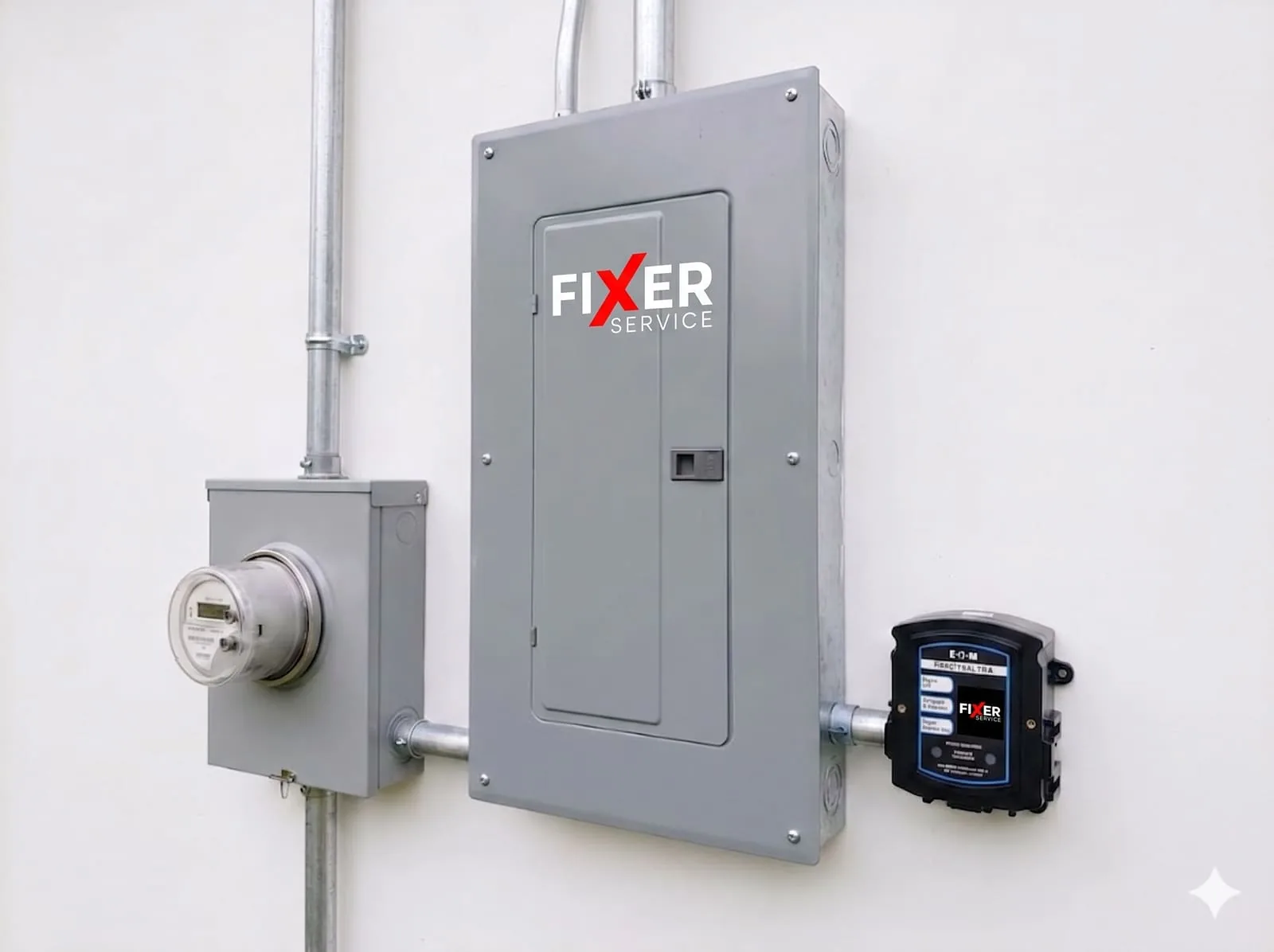
What Whole-Home Surge Protection Does
A whole-home surge protector — technically a Surge Protective Device (SPD) — mounts at or near the main panel. When a voltage spike arrives at the panel, the SPD clamps it to a safe level before it reaches your circuits.
The device contains metal oxide varistors (MOVs) that absorb excess voltage and dissipate it as heat. MOVs have a finite capacity — they degrade over time with each absorbed surge. This is why SPDs have indicators showing whether the device is still active.
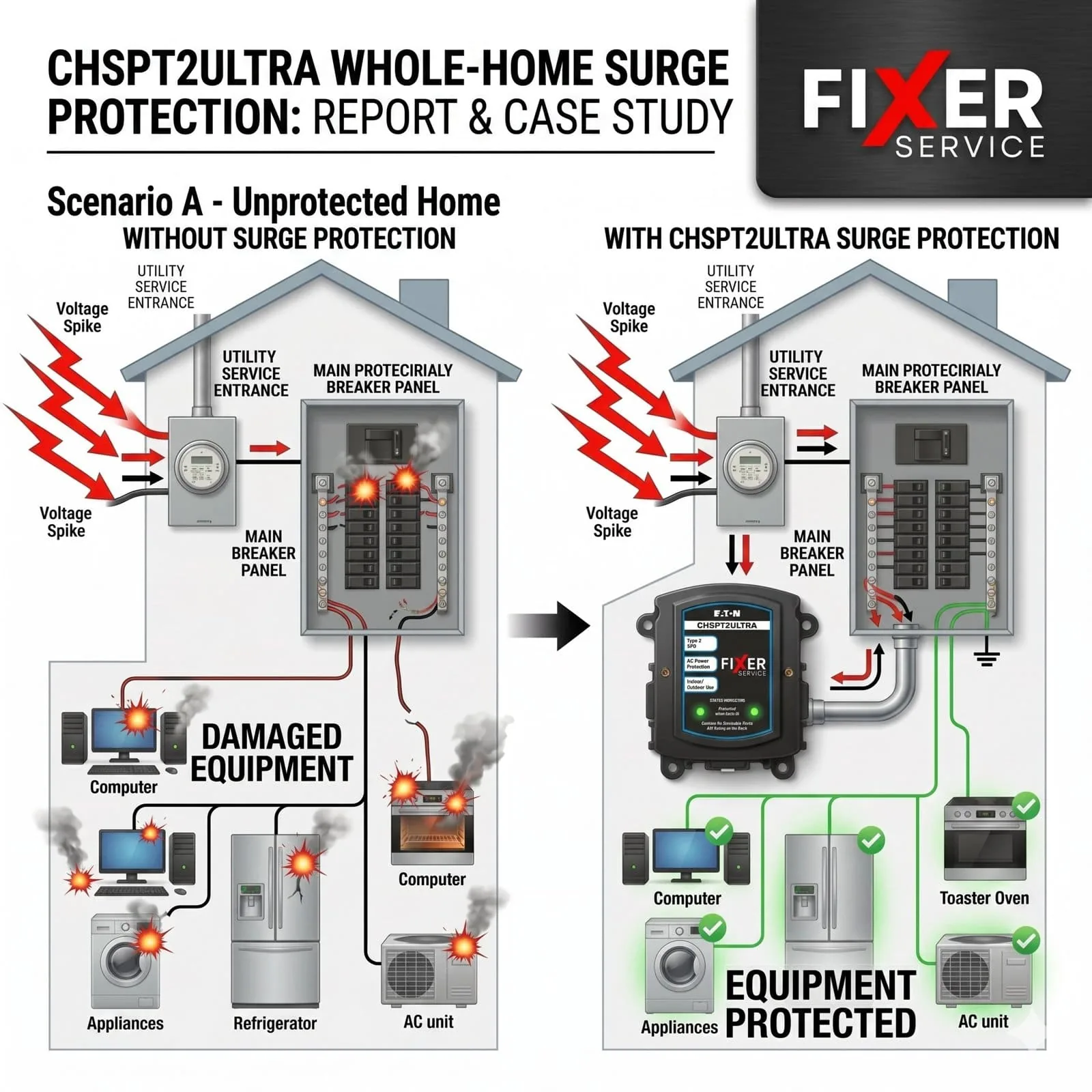
What it protects: - Appliances connected to 120V and 240V circuits - HVAC system electronics and control boards - Televisions, computers, and home audio - Smart home devices, EV charger electronics, and panel-connected loads
The wiring in your home that it protects: everything downstream of the panel.
Type 1 vs. Type 2 Surge Protectors
This distinction matters for the permit and the installation.
Type 1 SPDs are installed before the main disconnect — between the utility meter and the main breaker. They handle the highest-energy surges and are required by code in some applications. Type 1 devices require utility coordination in some cases.
Type 2 SPDs are installed at or after the main panel. These are the most common residential installation. They handle the surges that Type 1 devices don't fully clamp, and they protect against internally-generated surges as well — motors cycling on HVAC equipment generate small surges every time they start.
The professional standard is to install both when the budget allows — Type 1 at the meter, Type 2 at the panel. For most residential installations, a quality Type 2 device covers the meaningful risk.
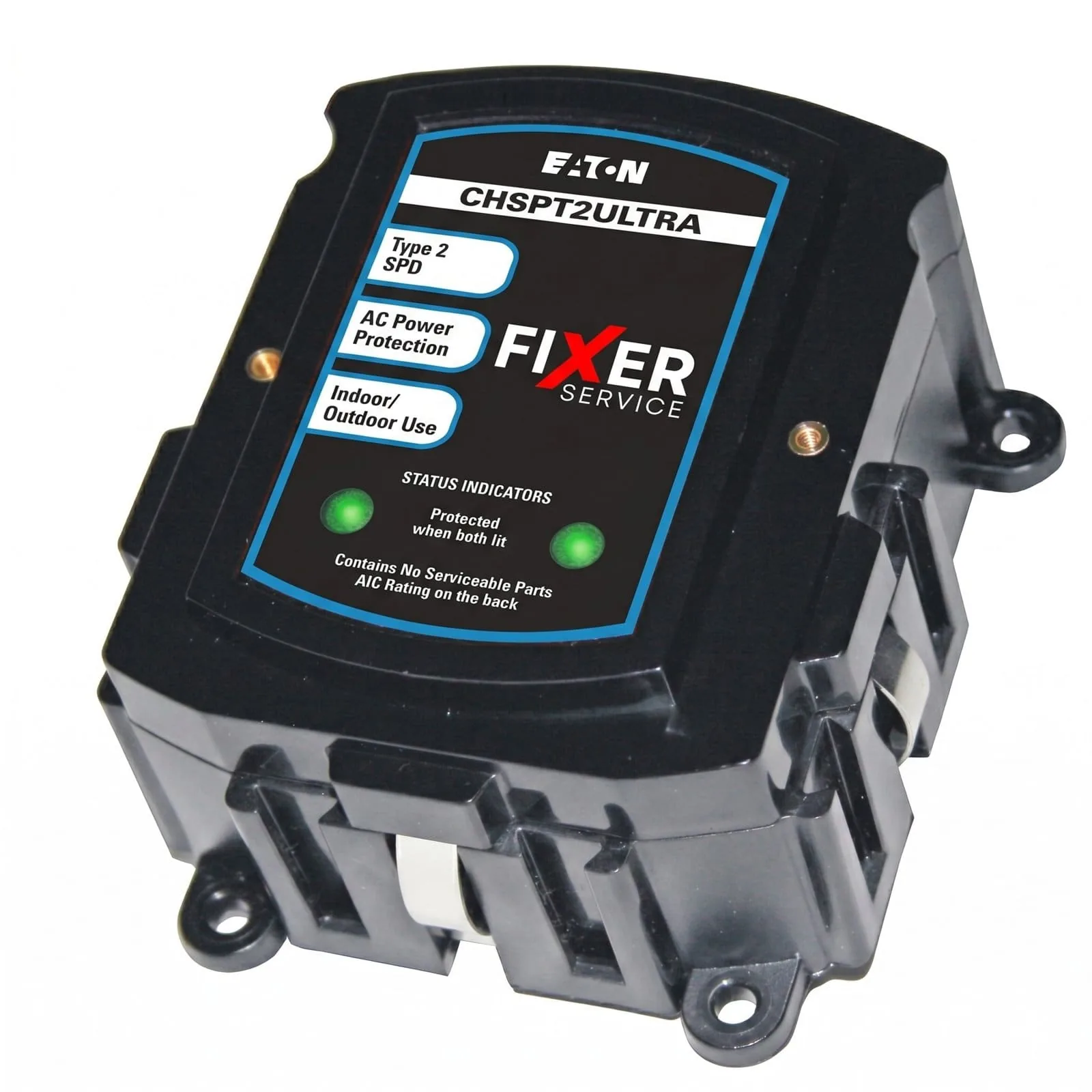
The Eaton CHSPT2ULTRA is a well-documented Type 2 device with 108kA capacity, a lifetime warranty, and $75,000 in connected equipment coverage. It's what we install on most residential jobs.
What Surge Protection Cannot Do
A direct lightning strike to your home — or to the service entrance — delivers energy in the hundreds of thousands of joules in a microsecond. No surge protector can absorb that. None. The MOVs will be destroyed, and everything connected may still be damaged.
Surge protection is not lightning protection. If your concern is a direct strike, that requires a lightning rod system and proper grounding — a different product and a different installation.
What surge protection does protect against is the more common scenario: nearby strikes, utility switching events, and the small daily surges your own HVAC system generates. These events are frequent and cumulative. An unprotected appliance receiving dozens of small voltage spikes per year degrades faster than one behind an SPD.
Cost and Installation
A whole-home Type 2 SPD installed at the main panel starts at $300 for most homes. A Type 1 and Type 2 combination starts at $500.
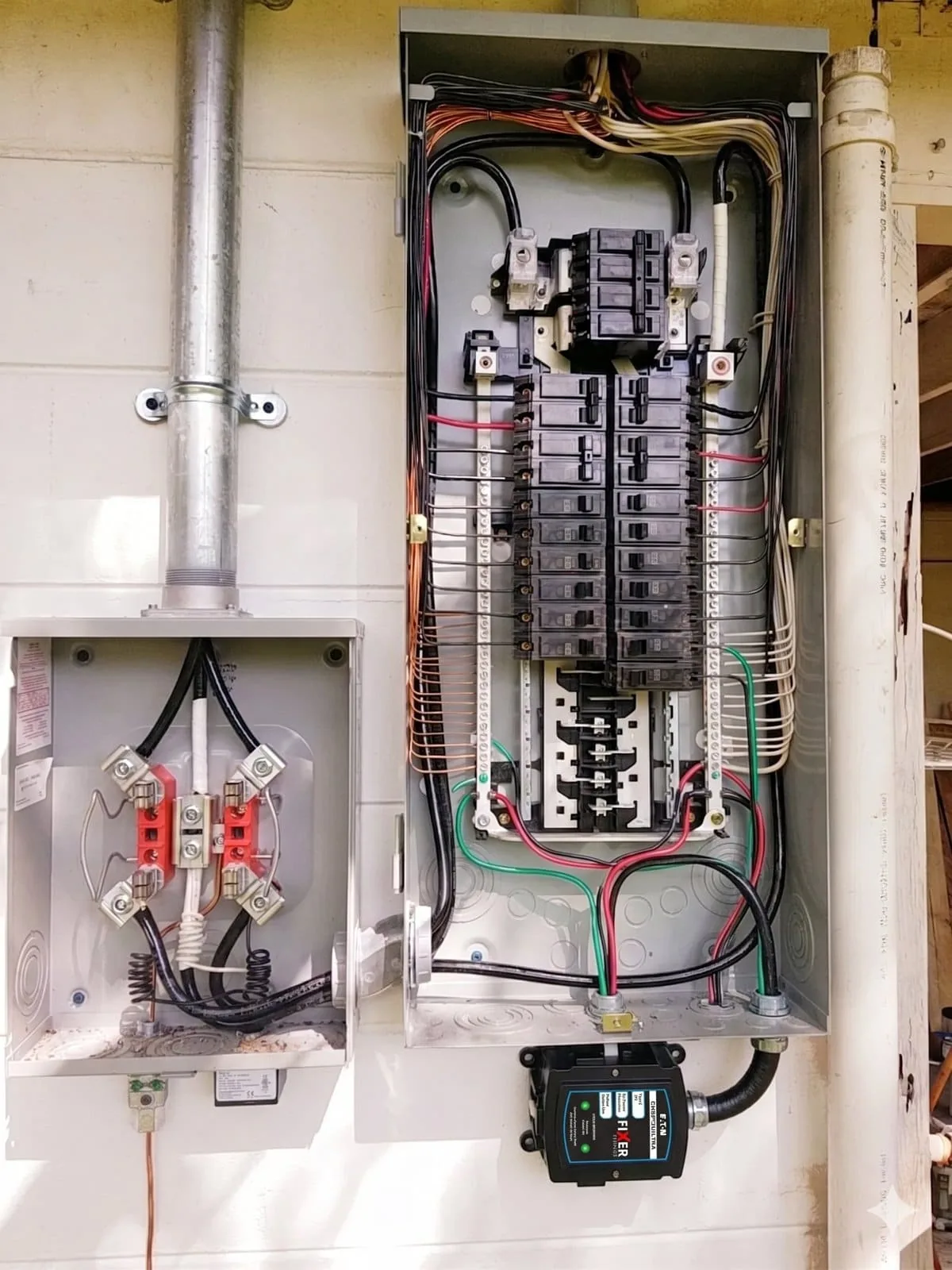
The installation takes one to two hours. The device mounts in or adjacent to the main panel, connected to the first available breaker slot or directly to the bus bar depending on type. A permit is required in most Florida counties for panel modifications — we handle filing and inspection. NFPA 70 Article 285 covers SPD requirements and installation standards. Florida's adoption of the National Electrical Code is enforced at the county level.
If you're also installing an EV charger or just completed a panel upgrade, adding surge protection at the same visit reduces labor cost — the panel is already open.
Is It Worth It in Tampa Bay?
Run the numbers. An HVAC control board costs $300–$700 to replace. A refrigerator compressor replacement starts at $400. A single TV may be $500–$2,000. Most homes have $5,000–$15,000 in panel-connected electronics and appliances.
A from $300 SPD installation is a reasonable expense against that exposure — particularly in a region where summer afternoon lightning is not an unusual event, it's a daily one.
It won't prevent every scenario. But the scenario it prevents is the most common one.
Tony
Licensed Electrical Contractor · ER-13016759 · Tampa Bay, FL
Owner of My Fixer LLC, serving Tampa Bay since 2018. 337 Google reviews at 4.9 stars.
About Anatoliy →Frequently Asked Questions
How much does whole-home surge protection cost in Tampa Bay?+
A Type 2 surge protector installed at the main panel starts at $300 for most homes. A Type 1 and Type 2 combination — highest protection level — starts at $500. Installation takes one to two hours. A permit is required for panel work in Florida, and we handle filing.
Does whole-home surge protection prevent lightning damage?+
It protects against voltage spikes from nearby lightning strikes traveling through utility lines. It cannot protect against a direct lightning strike to your home — that energy exceeds what any surge protector can absorb. For direct-strike protection, a lightning rod system is a different product.
What is the difference between a Type 1 and Type 2 surge protector?+
Type 1 installs before the main disconnect — handles the highest-energy surges. Type 2 installs at or after the main panel — handles utility surges and internally-generated surges from HVAC and motor equipment. The professional standard is to install both. Most residential jobs use a Type 2, which covers the primary risk.
What surge protector do you install?+
The Eaton CHSPT2ULTRA is what we install on most residential jobs. It's a Type 2 SPD with 108kA capacity, a lifetime warranty, and $75,000 in connected equipment coverage. It performs well in high-lightning regions.
Can I install a whole-home surge protector myself?+
The device itself is available at electrical supply houses. The installation — connecting to the main panel — requires opening a live panel and making connections to the bus bar or a breaker slot. This is licensed electrician work and requires a permit in Florida. DIY panel work is not legal and voids homeowner's insurance in most policies.
Does surge protection cover appliances plugged into power strips?+
Whole-home SPDs protect the wiring from the panel to the outlet. Devices plugged into power strip surge protectors have two layers of protection — the panel SPD and the strip SPD. Point-of-use strip protectors add protection for sensitive electronics. Both layers together give the most complete coverage.
How long does a whole-home surge protector last?+
MOV-based SPDs degrade with each absorbed surge. Most quality devices have an indicator light showing whether they are still active. Average lifespan: five to ten years in a high-lightning region like Tampa Bay. The Eaton CHSPT2ULTRA has a lifetime warranty and a clear indicator when replacement is needed.
Have a Question?
Ask our licensed electrician directly. Electrical and appliance repair specialist. You'll get a reply within minutes.