
A Level 2 home EV charger installation in Pasco, Hillsborough, or Pinellas County starts at $400 for labor and materials. With the charger unit, it starts at $1,000. That assumes the panel has capacity and the garage is close to it. The federal tax credit that used to take 30% off ended on June 30, 2026, so the price you are quoted now is the price you pay.
Every number in this post is a starting point. The exact number is written down after the $89 diagnostic, before any work starts.
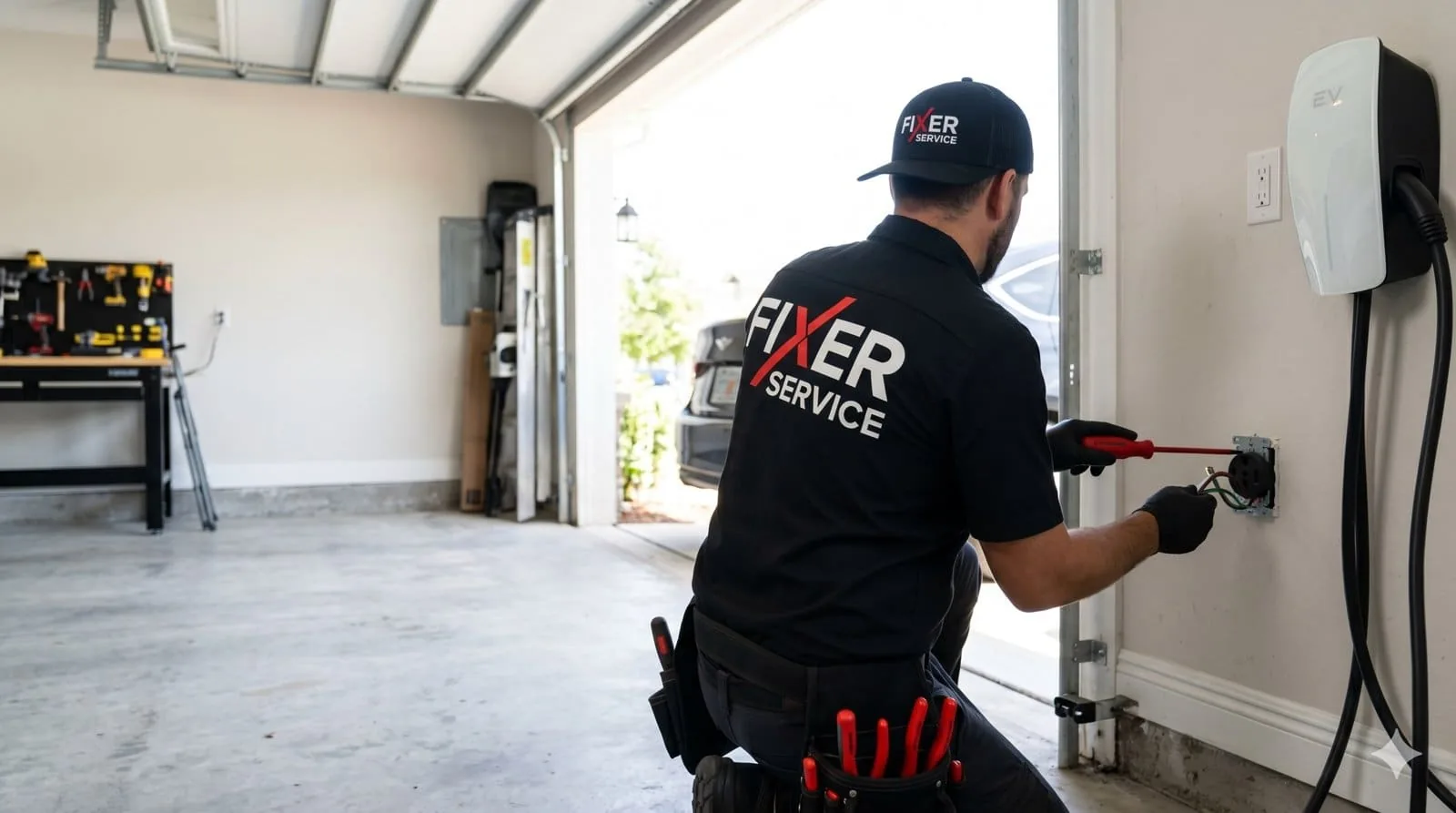
National cost guides average jobs from 50 states. Yours comes down to four things: how far the panel is from where you park, whether the panel has room for a 50-amp circuit, whether the charger lives indoors or out, and the county permit.
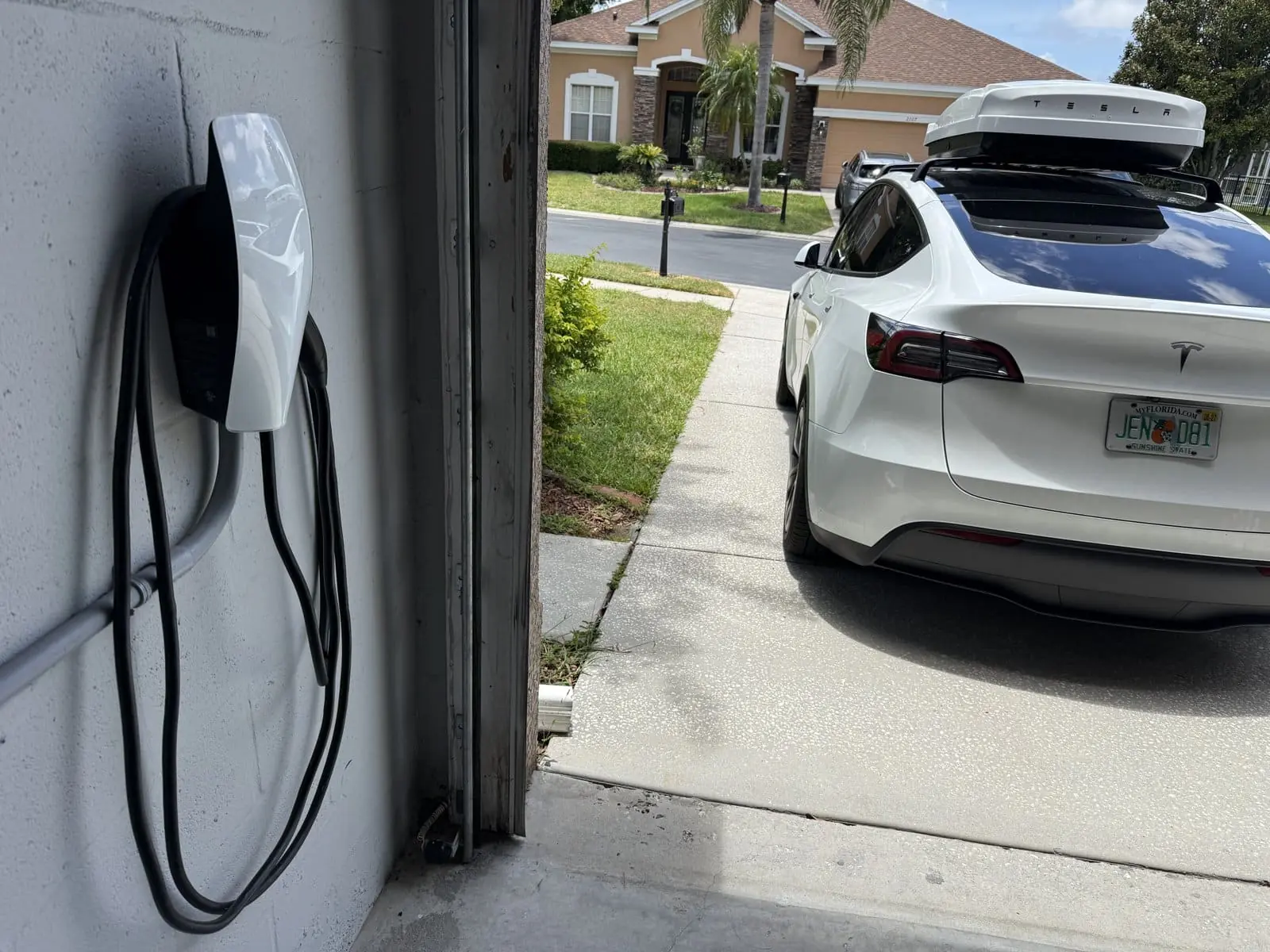
What drives EV charger installation cost
Distance from the panel
This is the biggest variable. A garage that shares a wall with the panel is a short run. A carport on the far side of the house is not.
A 100-foot conduit run instead of a 20-foot one adds from $300. A run that crosses the yard goes underground, and trenching adds to that. A detached garage with no power needs a subpanel first, from $800, as a separate job before the charger circuit.
Most Tampa Bay garages are concrete block, so the wire runs in conduit on the wall surface rather than inside it. That is normal here. It does not add much.
Panel capacity
A 200-amp panel with typical loading usually has room for a 40–50 amp circuit. A 100-amp panel often does not. Adding a 50-amp circuit to an overloaded panel is a fire hazard. We do not work around it.
Florida runs air conditioning most of the year, so panels here carry more load than the free slots suggest. We do a load calculation at the $89 diagnostic and tell you before anything is scheduled.
If the panel needs replacing, panel upgrades start at $2,911 for 200-amp service. Doing the charger circuit on the same visit costs less than two separate trips.
Indoors or outdoors
An outdoor charger or outlet needs a weatherproof enclosure rated NEMA 3R or 4X. Humidity, salt air near the coast, and summer rain eat indoor-rated fittings. It is a small line on the materials list, but it is why Florida installs run a little above national guides.
Surge protection
Florida gets more lightning than any other state. A nearby strike can take out a charger's electronics, and the charger warranty does not always cover it. A whole-home surge protector at the panel starts at $300 installed. Here is how that works and what it does not cover.
Permit
Florida requires a permit and inspection for any new 240-volt circuit. The permit starts at $75, depending on the county. We pull it, schedule the inspection, and give you the passed inspection when the job is done.
Keep that paper. An unpermitted charger circuit causes problems when you sell the house, and it gives an insurer a reason to deny a fire claim tied to that circuit. Skipping the permit saves the fee once. It costs more later.
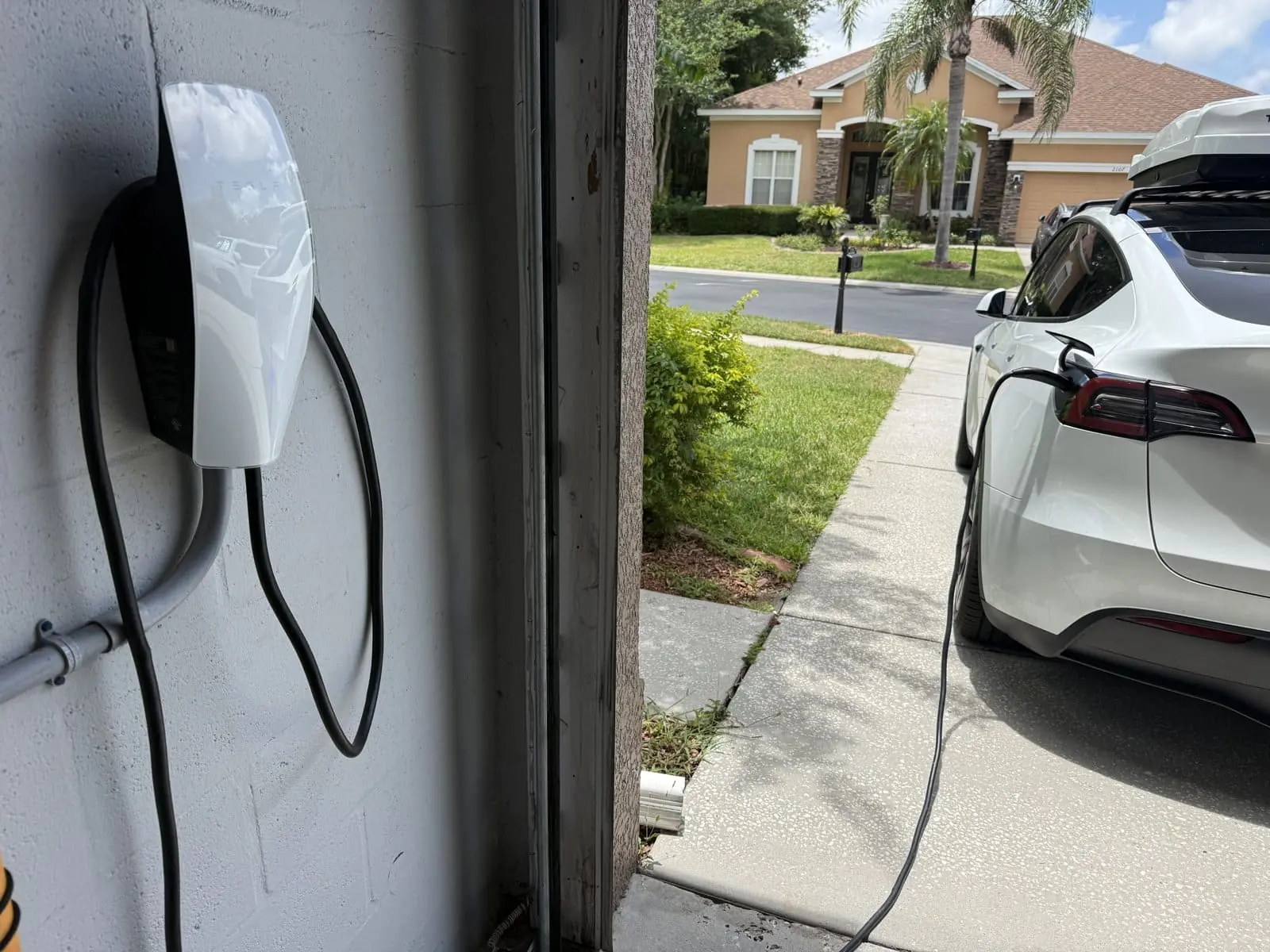
Cost breakdown by component
Charger unit (market prices, bought separately): Grizzl-E or Emporia, $400–$500. ChargePoint Home Flex or JuiceBox 40, $500–$700. Tesla Wall Connector, $420–$550.
Labor and materials: from $400. The dedicated 240-volt circuit from the panel to the charger, including wire, conduit, breaker, and connections. The charger is not included.
Permit: from $75, depending on the county.
Panel upgrade, only if the panel needs it: from $2,911. How long a panel upgrade takes.
Subpanel for a detached garage with no power: from $800.
Whole-home surge protection: from $300 installed.
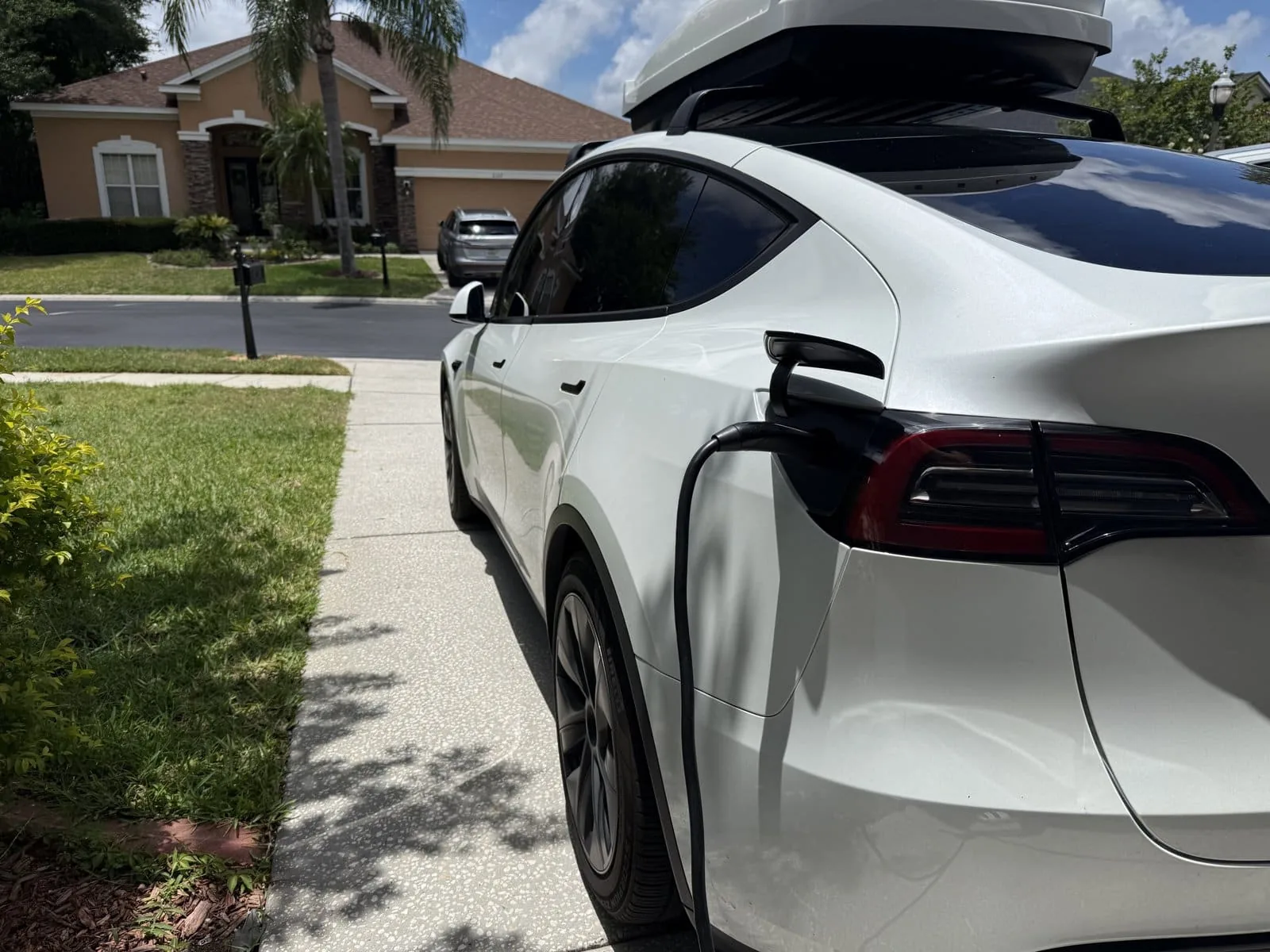
Three Tampa Bay scenarios
Scenario 1: attached garage, short run, panel has room
The most common one. The panel is in the garage or on the other side of the garage wall. The run is 15–20 feet. The panel is 200 amps with a free slot and spare capacity.
Labor, materials, permit, and charger: from $1,000.
Scenario 2: long run or a tight panel
The panel is inside the house, or the garage is on the far side. The run is 50–80 feet. Or the panel is 100 amps and the load calculation decides whether it can take the circuit.
Scenario 1, plus the longer run: from $300 more. If the load calculation fails, it becomes Scenario 3.
Scenario 3: detached garage or panel upgrade
A detached garage with no power needs a subpanel first. A full panel needs replacing first. These are two jobs.
Panel upgrade from $2,911 or subpanel from $800, plus Scenario 1. A meter base replacement, if the utility requires it, adds to that.
When you do not need a Level 2 charger
A standard 120-volt outlet adds 3–4 miles of range per hour. Plug in at 8 PM, unplug at 6 AM, and you have 30–40 miles. If your daily driving fits inside that, you do not need us. Try it for a month first.
A Level 2 charger (240 volts, 40–50 amps) adds 25–30 miles per hour. Most EVs go from near-empty to full in four to eight hours. If you drive more than 40 miles a day, or you do not want to plan around the plug, a dedicated circuit installation is the standard setup.
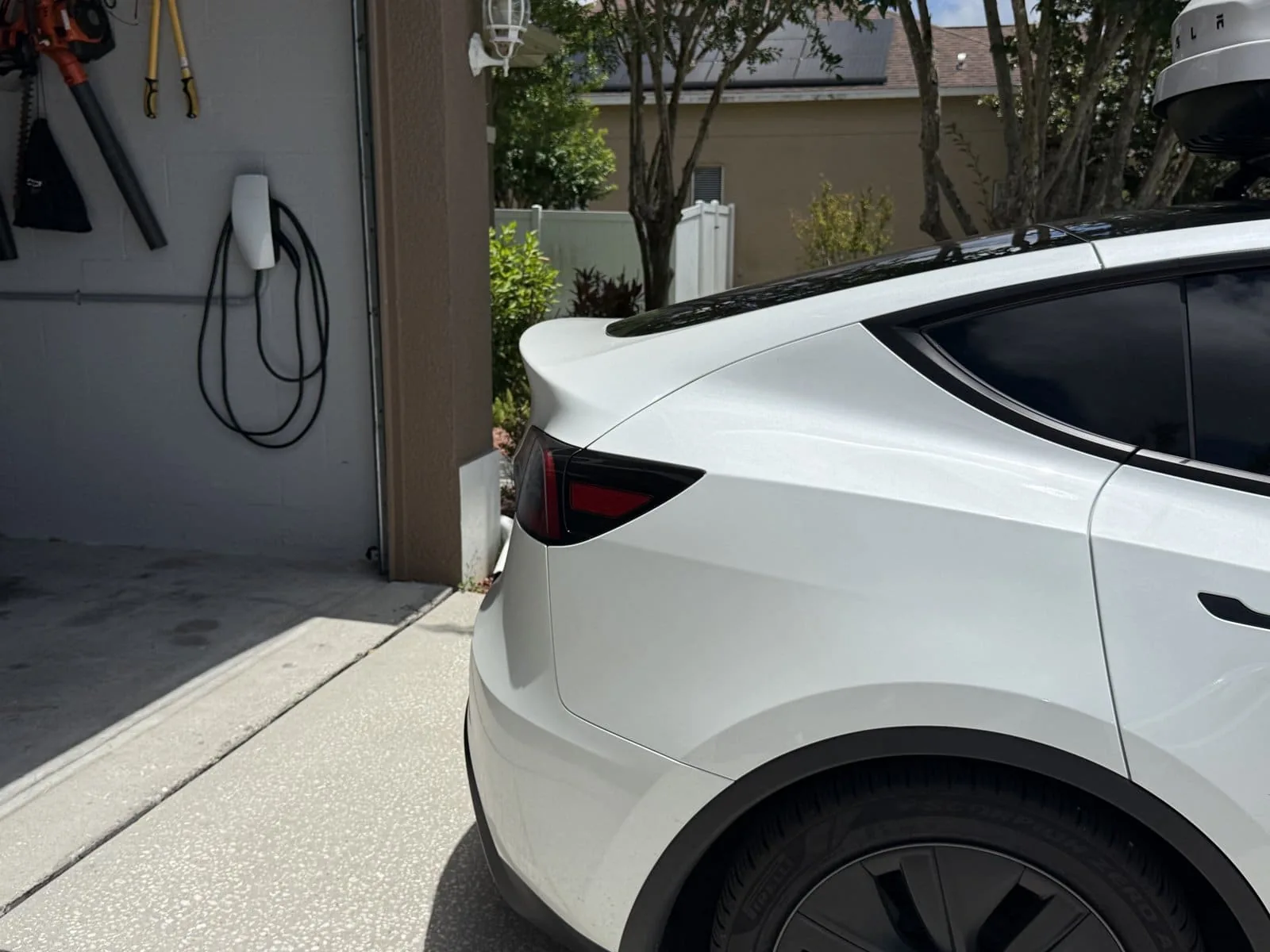
NEMA 14-50 outlet or hardwired charger
A NEMA 14-50 outlet is a 240-volt, 50-amp plug point, the same one RV parks use. Any plug-in Level 2 charger connects to it. You can change chargers later without an electrician and take yours with you when you move.
A hardwired charger connects straight to the circuit. No plug, no receptacle to wear out. The Tesla Wall Connector is hardwired only and needs a 60-amp breaker for its full 48-amp output.
The installed cost is about the same either way. The wire, conduit, and breaker are the same. Only the end of the run differs. What a 14-50 install involves, and why cheap 14-50 outlets melt.
Tax credits and utility programs in 2026
The federal credit is gone. The Section 30C credit covered 30% of a home charger and its installation, up to $1,000. The One Big Beautiful Bill Act moved its end date from 2032 to June 30, 2026. A charger placed in service after that date does not qualify. If yours was installed and working by June 30, 2026, you can still claim it on your 2026 return with Form 8911. The IRS page has the rules.
If an installer is still quoting the credit as a discount, they have not read the news. Price the job without it.
Florida has no statewide charger rebate. What exists comes from the utility:
- —Duke Energy Florida (Pinellas and most of Pasco) pays a $7.50 monthly bill credit to residential customers who charge on a Level 2 charger during off-peak hours. In 2025 it also announced a one-time Charger Prep Credit toward the wiring and electrical upgrades. It does not cover the charger or the permit. Ask Duke for the current amount before you schedule.
- —Tampa Electric (most of Hillsborough): check tampaelectric.com for current residential programs before you schedule. They change.
What to confirm before you sign
Is the permit in the quoted price? Some contractors quote labor and materials, then add the permit as its own line. Ours is included. Ask.
What happens if the panel is short? You want that answer before the work, not during it. The $89 diagnostic covers the panel assessment, a measured run, and a written quote. If you go ahead, the $89 goes toward the job.
Is the electrician licensed in Florida? Ours is ER-13016759. Look up anyone at the Florida DBPR license search before they start.
Do you get the passed inspection? You need it for the sale of the house and for insurance. We schedule it and hand you the paper.
We tell you the price before we start. You say yes or you say no. If you say no, you pay the $89 diagnostic and we leave. That is the deal on every job.
Tony
Licensed Electrical Contractor · ER-13016759 · Tampa Bay, FL
Owner of My Fixer LLC, serving Tampa Bay since 2018. 337 Google reviews at 4.9 stars.
About Anatoliy →Frequently Asked Questions
How much does EV charger installation cost in Tampa Bay in 2026?+
Labor and materials for a Level 2 installation in Pasco, Hillsborough, or Pinellas County start at $400, not including the charger. With the charger, installs start at $1,000. Long runs, a subpanel for a detached garage, or a panel upgrade move it up. The exact number is written down after the $89 diagnostic, before any work starts.
Is there still a federal tax credit for home EV chargers?+
No. The Section 30C credit ended for chargers placed in service after June 30, 2026. If your charger was installed and working by that date, you can still claim 30% of the cost, up to $1,000, on your 2026 return using Form 8911. Anything installed after that does not qualify.
Are there any EV charger rebates in Tampa Bay?+
Florida has no statewide rebate. Duke Energy Florida customers can get a $7.50 monthly bill credit for off-peak Level 2 charging, and Duke has offered a one-time credit toward the wiring. Tampa Electric customers should check tampaelectric.com for current programs. Utility programs change, so confirm before you schedule.
Do I need a permit to install an EV charger in Florida?+
Yes. Florida requires a permit and inspection for any new 240-volt circuit. The permit starts at $75, depending on the county. We pull it and schedule the inspection. An unpermitted circuit causes problems at resale and gives an insurer a reason to deny a fire claim tied to it.
Can I install an EV charger myself to save money?+
Florida's owner-builder exemption lets a homeowner pull a permit and do electrical work on the home they live in. The work still has to pass inspection. A 50-amp circuit wired wrong can start a fire or damage the car's charging system. If you are not sure how to size the wire and breaker, that is the answer.
Does my panel need to be upgraded for a Level 2 charger?+
Not always. A 200-amp panel with spare capacity usually has room for a 40–50 amp circuit. A 100-amp panel often does not, especially with Florida's air conditioning load. We check at the $89 diagnostic. Panel upgrades start at $2,911 for 200-amp service.
How long does EV charger installation take?+
Two to four hours for a standard garage install. Long runs, underground conduit, or subpanel work take longer. The permit inspection happens within a few days, and we schedule it.
Is a NEMA 14-50 outlet better than a hardwired EV charger?+
A 14-50 outlet lets you use any plug-in Level 2 charger and take it with you when you move. Hardwired has no receptacle to wear out, and it is the only option for the Tesla Wall Connector at full speed. The installed cost is about the same.
Have a Question?
Ask our licensed electrician directly. Electrical and appliance repair specialist. You'll get a reply within minutes.